
Download and print as a PDF (334kB pdf)
Fracture Clinic Department
What is this information about?
This information is about a recurrent patella dislocation.
It tells you:
- How to look after yourself when you go home from hospital with a recurrent patella dislocation
- What exercises you can do to help heal your knee
- What follow-up treatment you might have
- Who to contact if you need further help and support
What is recurrent patella dislocation?
A patella dislocation happens when the patella (kneecap) at the front of the knee comes out of joint. A recurrent dislocation means that this has happened to the same kneecap before.
How long is it likely to take for my injury to heal?
It can take approximately 6 weeks for a patella dislocation to heal.
Will smoking or vaping slow down my healing?
Yes. Smoking slows healing so if you smoke or vape try to stop or cur down. This is most important in the first 2 weeks after your injury. If you would like help to stop smoking talk to your GP or visit Quit smoking – NHS for further information.
What should I do if I am in pain or have swelling after my patella dislocation?
Your knee may be swollen, and you may have some pain.
Swelling is often worse at the end of the day.
If you are in pain, take your usual pain killers or pain killers given to you in the emergency department. Follow the dose instructions on the packet.
If you are struggling with pain do speak to your GP or pharmacist. You can use an ice pack or bag of frozen peas wrapped in a damp towel. Put this on your knee for up to 15 minutes every few hours.
Make sure the ice is not in direct contact with your skin.
It is normal to have mild pain and swelling for 3-6 months.
Will I have a brace after I have had a recurrent patella dislocation?
You may have been given a brace in A&E.
The knee brace should be worn for comfort when you feel that you need it. You are allowed to put weight through your leg.
You may find it easier to use crutches in the early stages.
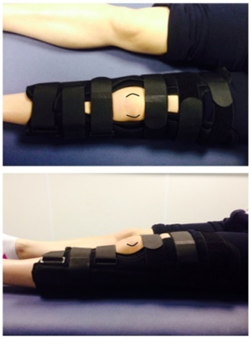
What should I do if I am struggling with my brace?
Contact the Virtual Fracture Clinic. We can give you advice.
What do I do with my brace and crutches when I no longer need them?
We are not able to use the brace again. It should not be returned to the hospital. Crutches can be returned to the Fracture Clinic or A&E.
Will I have a further appointment (follow up)?
Yes. We will arrange for you to see a specialist approximately two weeks after your injury.
They will talk with you about the next stage of your treatment.
You will be sent an appointment date and time by post. Please contact us if you have not received this appointment.
If agreed over the phone, we will also refer you to physiotherapy to guide you with the next phase of your rehab. The physiotherapy team will contact you separately for an appointment.
What should I do in the first one to three days after my injury?
- Try to rest your knee, especially in the first 24-72 hours (1-3 days).
- Raise your leg on a stool or cushions so that it is above the level of your hip. This will help to reduce your swelling.
What exercises can I do?
Early movement of the ankle and foot is important to promote circulation and reduce the risk of developing a Deep Vein Thrombosis (blood clot).
Do these exercises 3-4 times a day. Start straight away, you do not need to push into pain.
Ankle Exercises
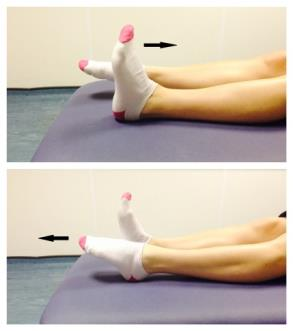
Point your foot up and down. Repeat this 10 times.
Static Quadriceps Exercise
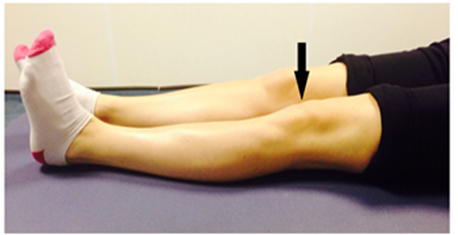
Rest with your leg supported and straight. Gently tense the muscles in your thigh and try to straighten your knee further. Hold for 5 seconds and repeat 7-10 times.
What other things can the Virtual Fracture Clinic help me with?
Please contact the Virtual Fracture Clinic if:
- You are concerned about your symptoms
- you are struggling to return to exercises or your usual activities
- you would like further information or support after you have read this information
When can I start driving?
You can return to driving when:
- You are no longer using your brace
- you can walk comfortably
- you can perform an emergency stop pain free
Always test your ability to drive in a safe environment first.
How can I get a note for work?
You can get a sick certificate from the Virtual Fracture Clinic, or the specialist at your fracture clinic appointment.
Who do I contact if I need to change my appointment?
If you have not yet been seen face-to-face in the fracture clinic, please contact the Virtual Fracture Clinic on the details below.
If you have already been seen in a fracture clinic, please contact the booking hub on 0300 3038360.
If I need further advice about my injury, who can I contact?
Please contact the Virtual Fracture Clinic on the below details:
 Royal Sussex County Hospital
01273 696955
Ext. 63428
Royal Sussex County Hospital
01273 696955
Ext. 63428

 Monday to Friday
8:00 am to 4:00 pm
Monday to Friday
8:00 am to 4:00 pm
If contacting by phone, please leave a message with your date of birth, name and clear contact details, along with a brief message about what problems you are having.
We will contact you back as soon as possible.
We aim to get back to you within 24 hours.
Contacting us by email would be preferable as the phone line can be very busy.
This leaflet is intended for patients receiving care in Brighton and Hove.
The information in this leaflet is for guidance purposes only and is in no way intended to replace professional clinical advice by a qualified practitioner.
Today’s research is tomorrow’s treatments. That’s why UHSx is proud to be a research-active Trust. Find out how you can get involved.
Visit our website www.uhsussex.nhs.uk/research-and-innovation/information-for-patients-and-public or scan the QR code: 