
Download and print as a PDF (456kB pdf)
Information for patients
What is this information about?
This information is about chest wall injuries that are being managed without an operation (conservative management).
It explains:
- The types of chest wall injuries covered in this information
- Possible complications after a chest wall injury
- How long recovery may take
- How pain relief, breathing exercises and movement can support your recovery
- When to seek further medical advice.
Why have I been given this information?
You have been given this information to help you manage a chest wall injury and support your recovery. Following the advice in this leaflet, taking pain relief, doing deep breathing exercises and moving early may help support your recovery and reduce the risk of complications.
What types of chest wall injuries are there?
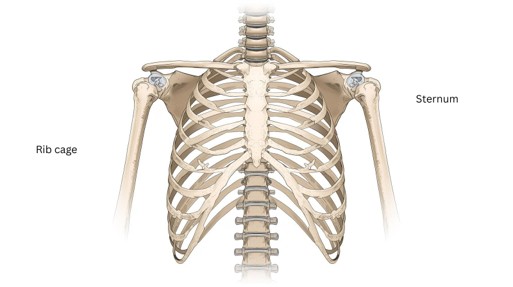
It is usual to have chest wall injuries after an injury (trauma) to your chest. These can include:
- Rib fractures (breaks in one or more ribs)
- A fracture of the breastbone (sternum)
- Bruising to the lungs (lung contusion).
What complications can happen after a chest wall injury?
- Pain may make it harder to take deep breaths, cough to clear your chest and move around safely.
- Taking shallow breaths and reduced mobility can increase the risk of developing a chest infection.
- Limited movement may increase your chance of having a fall or slow your recovery.
How long will it take to recover?
- It usually takes about 6 weeks for rib and sternum bones to heal.
- Rib and sternum fractures are often more painful during the first couple of weeks after the injury. Your medical team will provide pain relief to help manage this.
- If you have broken several ribs, or if some ribs have moved out of place (displaced), recovery can take longer and may take 6 to 12 weeks or more.
- Do not do heavy lifting during the first 6 weeks, as this is likely to cause more pain and it may take you longer to recover.
What should I do to help my recovery?
Pain relief
Take your pain medication as prescribed. Do not wait until the pain becomes severe. Good pain control is important because it can help you take deeper breaths, cough and move around more easily.
If you feel your pain is not well controlled, speak to your nurse or doctor if you are in hospital, or your GP if you are at home.
Deep breathing exercises
While you are in hospital, you will be shown how to complete deep breathing exercises and ways to help you cough and clear your chest.
When you are doing your deep breathing exercises:
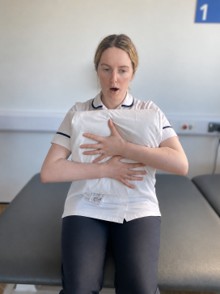
- Aim to build up to 10 deep breaths every 1 to 2 hours while you are awake
- Hold each breath for about 3 seconds, then breathe out slowly
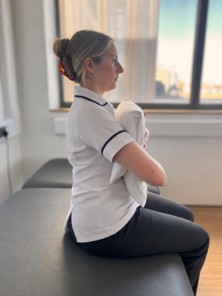
- Do not stop yourself from coughing. Hold a pillow or rolled towel over the painful area to make this more comfortable
- If you have difficulty clearing secretions (such as phlegm or mucus), your team can review this with you and refer you for a physiotherapy review if required.
Upper body exercises
These exercises can help improve movement in your chest and arms and help prevent stiffness.
Upper body exercises include:
- Rolling your shoulders backwards in small circles
- Squeezing your shoulder blades back and down to open your chest
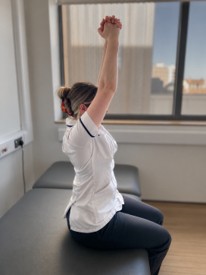
- Holding your hands together while sitting and lifting your arms above your head, with your elbows bent or straight. You can also do this exercise while lying down if this is more comfortable.
Aim to perform 5-10 repetitions of each exercise daily as comfortable until you feel your upper body movement is back to your normal.
How can I move safely?
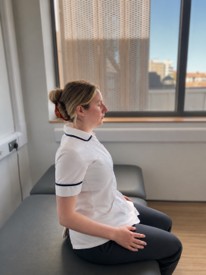
Try to sit up in bed or in a chair whenever possible, as this helps your chest and lungs.
While you are in hospital, you will be supported with techniques to get in and out of bed and move safely around the ward.
As soon as you are able, try to move around often during the day. Slowly increase the distance as you feel comfortable.
Getting out of bed
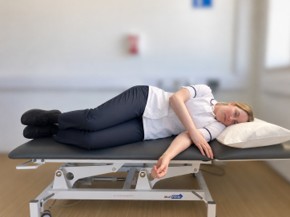
- Roll onto your least painful side.
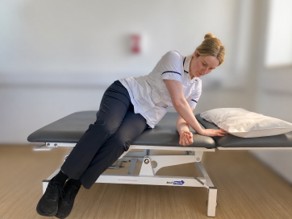
- Keep your arms close to your body and let your legs hang over the side of the bed.
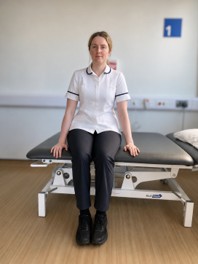
- Push yourself up using your arms, keeping them close to your chest.
Getting back into bed
4. Reverse these steps, rolling carefully onto your back.
You can:
- Use extra pillows to raise the head of bed for comfort
- Hold a pillow or rolled towel against your chest for extra support, especially if you have a breastbone injury or multiple fractured ribs.
When can I go back to work and my daily activities?
Returning to work:
- You can return to work within a few weeks after injury when you feel well enough to do so and your pain levels are well controlled.
- If your job role requires lots of heavy lifting, twisting or bending, you may need to discuss with your employer about temporarily adjusting your duties whilst you are returning to work.
Daily activities:
- You may feel more tired than usual whilst recovering following a chest wall injury and hospital admission. Pace your daily routine to allow for rest breaks if needed and build up your daily activities week by week whilst recovering.
- Avoid heavy lifting tasks during first 6 weeks such as; carrying heavy shopping bags, vacuuming or lifting up children, as this is likely to cause more pain and it may prolong your recovery.
What should I do if I feel more unwell after I get home?
You will be sent home from hospital with a supply of pain relief medication. If you are still having discomfort or need more pain relief, speak to your GP for further advice.
Do seek medical advice straight away if you:
- Have pain that is getting worse – preventing you from moving, taking a deep breath or being able to cough.
- New onset of shortness of breath
- New high temperature
- If you are coughing up blood.
- If you are coughing up more phlegm or mucus which becomes discoloured (sign of chest infection).
Who should I contact if I would like further information or have any questions or concerns after I have read this information?
- If you have further concerns, either speak to your GP for advice or call ‘111’ NHS advice line for advice regarding your symptoms.
- In an emergency please call ‘999’ or attend your local A&E department.
The information in this leaflet is for guidance purposes only and is in no way intended to replace professional clinical advice by a qualified practitioner.
Today’s research is tomorrow’s treatments. That’s why UHSx is proud to be a research-active Trust. Find out how you can get involved.
Visit our website www.uhsussex.nhs.uk/research-and-innovation/information-for-patients-and-public or scan the QR code: 