
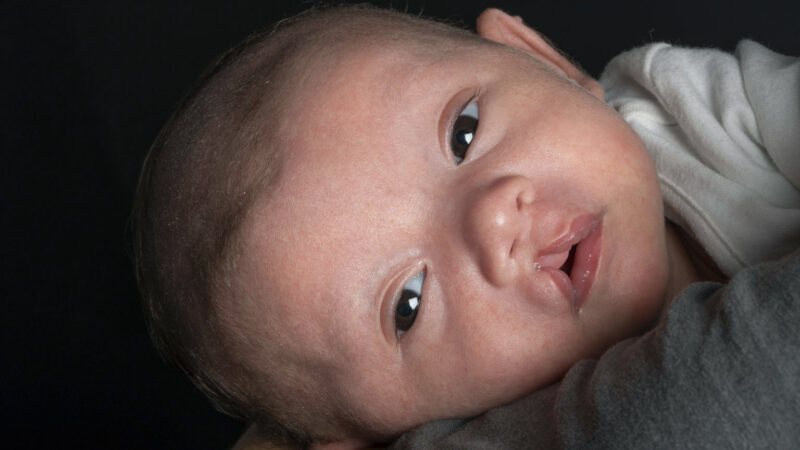
“It is incredibly important to show our children, and other children, that difference is beautiful, unique and equally as worthy. Every smile is beautiful and deserves to be celebrated!” said Kerry Aldam, Mum to three-month-old Theo (pictured above), who was born with a cleft lip.
This is why patients with a cleft lip or palate are now receiving a professional keepsake portrait as part of their appointment at University Hospitals Sussex, transforming routine clinical visits into a more positive and empowering experience.
Senior Clinical Photographer and advocate, Stacey Hussell, has drawn on her own lived experience of a visible difference, both as a patient and parent, to launch a special portrait project for patients with a cleft lip and/or palate.
The initiative offers children and adults with a cleft across Sussex, a beautiful portrait alongside their routine clinical photographs, helping to challenge stigma around visible differences and celebrate every individual smile.
Stacey said: “I think when people with a cleft lip and or palate are only shown through a medical or before-and-after lens, it quietly sends the message that they are defined by a condition that needs fixing.
“I feel that positive representation pushes back on that. It shows that cleft-affected individuals are whole, capable, attractive, talented and worthy, just like anyone else. I think this is important as representation shapes how people see others and how people see themselves.”
A cleft is a gap or split in the upper lip or roof of the mouth (palate). This happens when a baby is developing in the womb and affects around one in 700 children in the UK (Cleft Lip and Palate Association).
Stacey herself was born with a unilateral cleft lip and palate. During secondary school, she experienced bullying that left her self-conscious about her appearance. Over time, she gained confidence, met her husband, Dave, and became a mother to daughter, Niamh.

When Stacey’s second child, Dylan, was born with a bilateral cleft lip and palate, she found herself worrying about the challenges he might face. Having undergone 13 surgeries herself, she knew the journey ahead all too well.
Determined to fill Dylan and others with confidence and pride, she set out to use her photography to make a meaningful difference. This became the foundation of ‘Smile Journey.’
For patients being treated by the cleft team, appointments can feel daunting, surrounded by clinical professionals and having multiple photographs taken to document their clinical journey, before and after surgeries.
As part of these appointments, Stacey and her colleagues in the Clinical Media Centre, now offer patients and families a free, professional keepsake portrait, capturing their smile in a celebratory way.
Stacey said: “These photos say – your story matters, your face matters. I hope they are changing the way people view themselves and how they feel about their hospital experience.”


Kerry was delighted to have Theo’s portrait taken. She said: “We are really pleased to be part of this amazing project and to share Theo’s beautiful smile with others. We are determined to show Theo that his ‘pre surgery’ smile will be as cherished as his forever smile.”
Stacey first launched the project at Queen Victoria Hospital, where she previously worked, and has now brought it to University Hospitals Sussex so that even more young patients can benefit from a supportive and inclusive approach to visible differences as part of their care.
The cleft service at the Royal Alexandra Children’s Hospital in Brighton is a monthly outreach clinic run by a multi-disciplinary team, supporting patients following surgery at Guys and St Thomas’ in London.
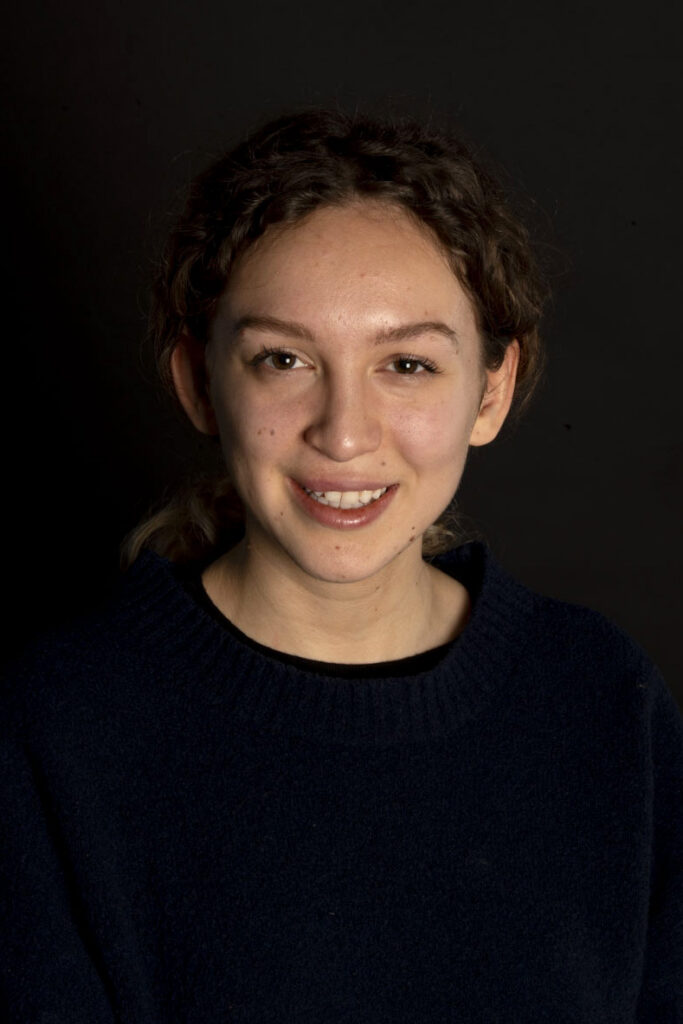
Alongside Smile Journey, Stacey is also working on her own personal project ‘Changing Smiles,’ photographing 700 people with a cleft, reflecting the one in 700 statistic and giving visibility to the community behind it.
Stacey said: “My aim one day is to fill the first page of Google images with beautiful photos of these amazing individuals instead of the clinical, sterile and sometimes quite scary looking images it now has.”
Stacey has even expanded her project to include all visible differences and hopes to one day be able to introduce this within the hospital setting.
We want every patient to have the best possible experience and are committed to delivering excellent care together. This project reflects our new five‑year Trust strategy, which focuses on living our values of compassion, inclusion and respect in everything we do. These values are the foundation of our culture and guide how we care for our communities.