
Our research teams have been busy getting out into communities across Sussex this summer to help people discover, understand and get involved in supporting health and care research taking place across University Hospitals Sussex (UHSussex).
Teams from UHSussex have been taking research beyond hospital walls and into communities across Sussex, meeting local people at Pride events, community celebrations, schools, nurseries and cancer support groups to listen, learn and create more opportunities for people to get involved in shaping research.

Louise Goodall, Clinical Lead Nurse for Education (Research), and Laura Donaldson, Research Engagement Nurse, from the Trust’s Research Education and Engagement team, have been helping lead this work.
Louise Goodall said: “By taking research beyond our hospitals and into the places where people live, learn and come together, we can better understand what matters to our communities, and ensure that our research better reflects the people we care for.”
Everyone can play a part in research
At UHSussex, research is an important part of how we improve care and a key part of our ambition to provide Excellent Care Everywhere. It helps us find new treatments, improve services and better understand the needs of our patients. It helps us find new treatments, improve services and better understand the needs of our patients.
You do not need to be healthcare professional or a scientist to contribute to clinical research.
Alan Sutton, a UHSussex Research Champion, has seen the value patients and members of the public can bring when they are part of the conversation. He said: “Research has the greatest impact when patients and the public feel that it belongs to them too. By getting out into our communities, listening to people and giving them opportunities to ask questions and share their experiences, we can help make research more accessible and relevant to everyone. The experiences and ideas of patients, families and local communities help researchers understand what really matters to the people their work is intended to benefit.” Find out how you can support research at UHSussex by becoming a research champion.
Reaching people where they are
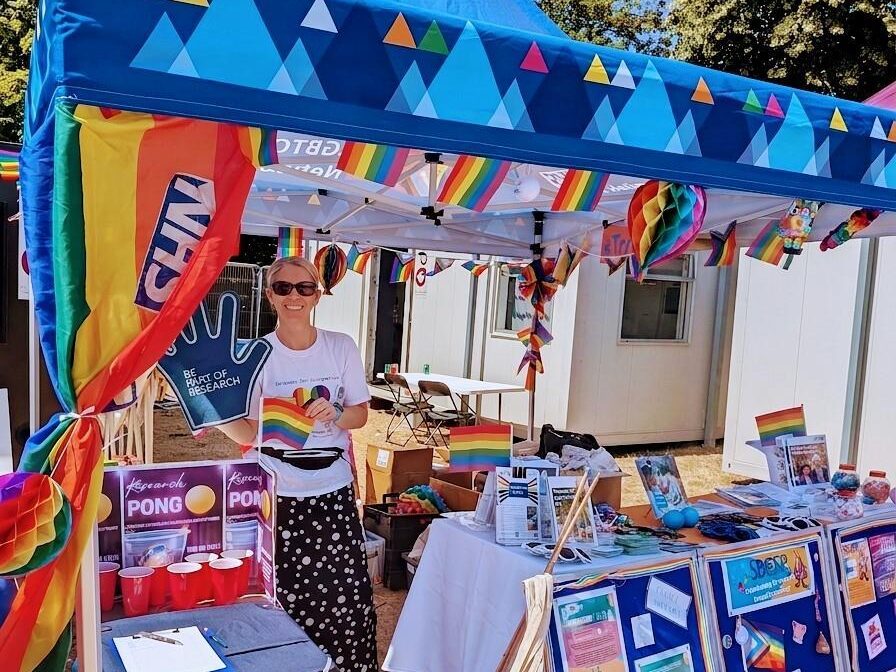
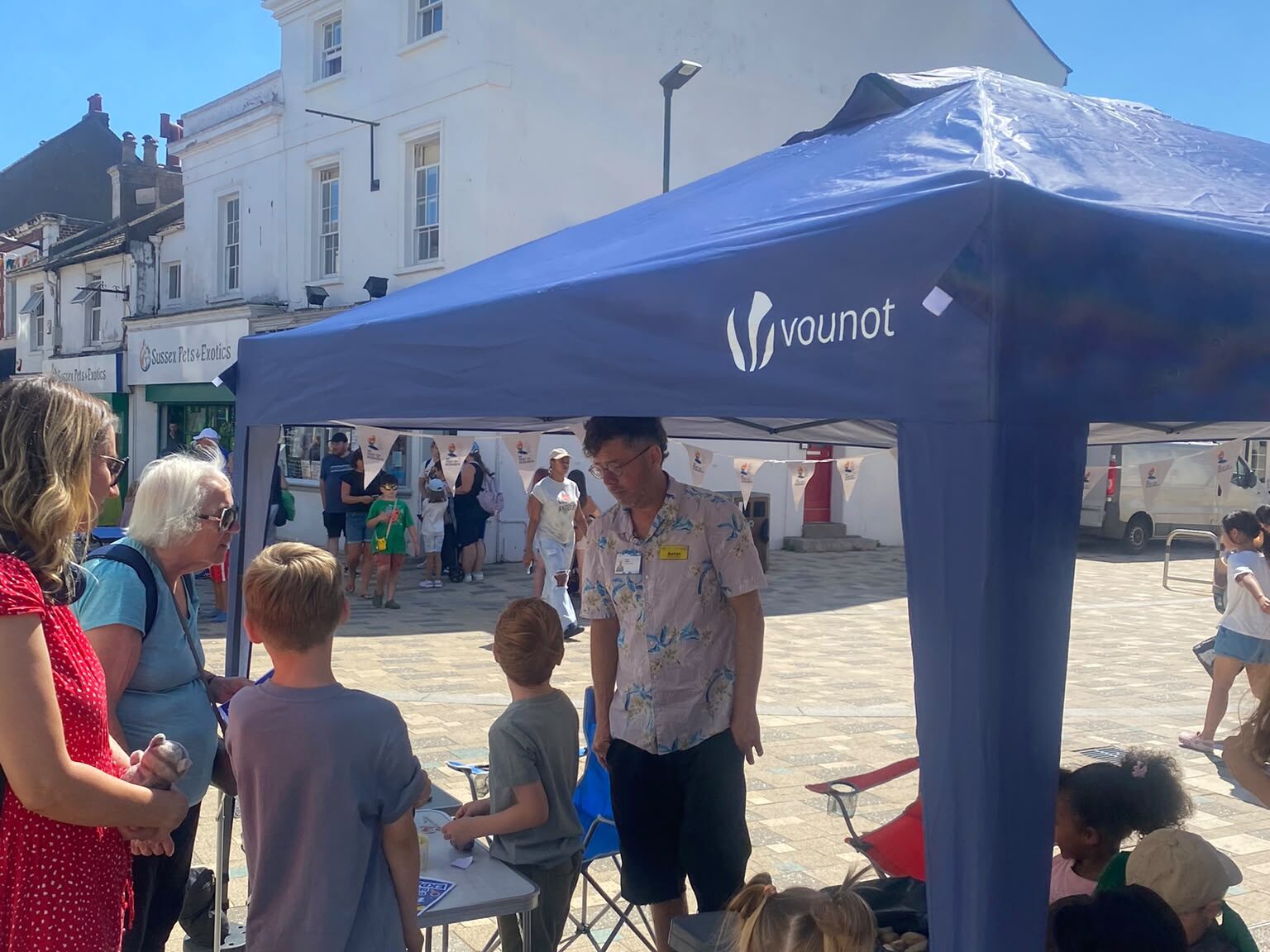
This summer, the team has joined Littlehampton Summer High Street events and Pride celebrations across the region, bringing conversations about research into familiar community spaces.
Laura Donaldson said: “It has been great to meet local people on the High Street for informal chats, giving them the chance to ask questions, find out more about health and care research, and discover how they can get involved. Taking research into familiar spaces and engaging all – from three-year-olds to their parents, grandparents and carers enables us to reach people who might not otherwise hear about opportunities to contribute to research. It also gives us the chance to hear about local experiences and priorities, helping us identify barriers to involvement and ensure that research better reflects our communities.”
Pride events have also created opportunities to talk about research opportunities with LGBTQI+ communities – some of whom have historically been underrepresented in health and care research – about studies including those looking to improve the access to cervical and prostate cancer screening for trans and non-binary people, as well as people who find current screening methods inaccessible. Being present at community events helps build relationships, makes research more visible and gives people opportunities to share what matters to them. The more representative research is of the people UHSussex serves, the better researchers can understand whether treatments and services meet the needs of diverse communities.
Inspiring the next generation
UHSussex is also introducing some of the youngest members of our communities to research through the Little Researchers programme.
Working with nurseries and primary schools, Little Researchers uses fun, age-appropriate activities to encourage children to ask questions, investigate ideas and discover how we find answers. Building on children’s natural curiosity, the programme introduces the basic ideas behind research and helps children understand how asking questions and investigating ideas can contribute to improving healthcare.
The programme extends conversations about health and research beyond the classroom, reaching parents, carers and teachers and helping children understand from an early age that research is something that can involve and benefit everyone.
To bring Little Researchers to your nursery or school please contact [email protected] or call 07920 590485 / 01903 205111 ext 85873
Listening to lived experience
At workshops run by cancer support charity Look Good Feel Better, the team met people affected by breast cancer to hear directly about their experiences.
These conversations help researchers better understand the issues that matter most to patients and ensure future research remains focused on improving outcomes and experiences of care.
Helping us provide Excellent Care Everywhere
The care patients receive today has been shaped by research and by people who have taken part in studies and shared their experiences. By involving more people now, we can continue improving care for the future.
Whether we are meeting people on Littlehampton High Street or at Pride events, inspiring children through our Little Researchers programme or listening to people affected by breast cancer, the aim is the same: to make research accessible and relevant to the communities we serve.
By taking research into our communities and listening to what people tell us, we can give our patients and the public more opportunities to help shape research and, ultimately, provide better care for everyone.
Be a Part of Research
Sign up to be contacted about clinical research that may be suitable for you at NIHR Be a Part of Research