
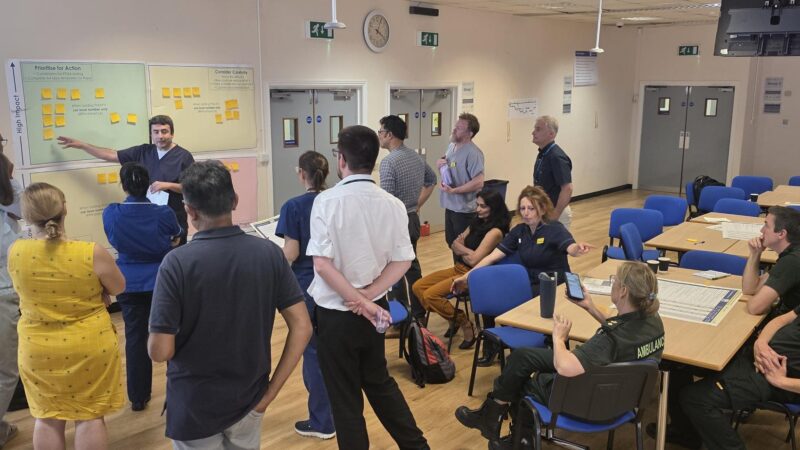
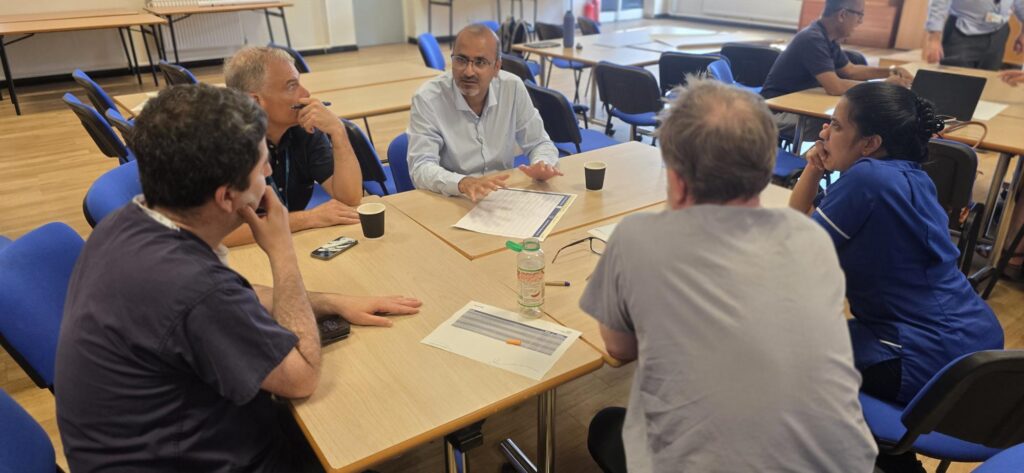
Stroke physicians and specialist nurses were joined by paramedics, radiography and emergency care colleagues at a special event at St Richard’s on 9 July to improve access to life-changing treatments for stroke patients.
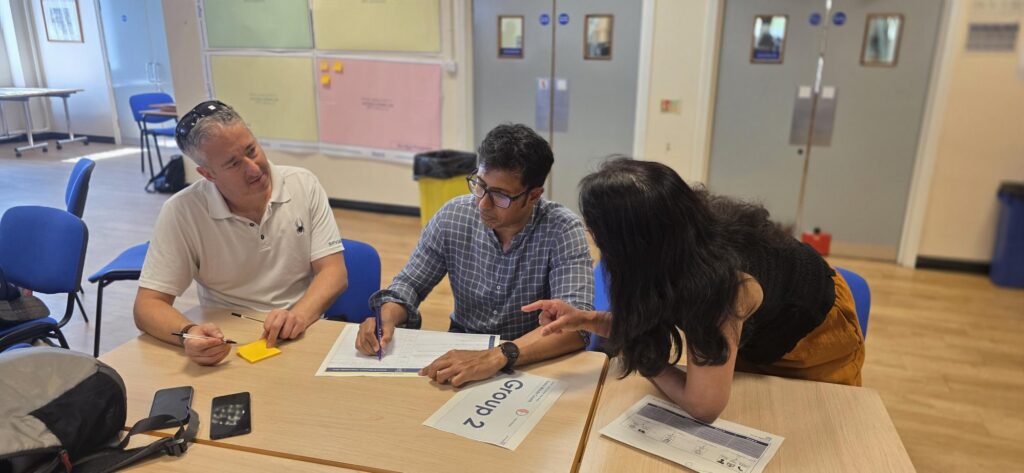
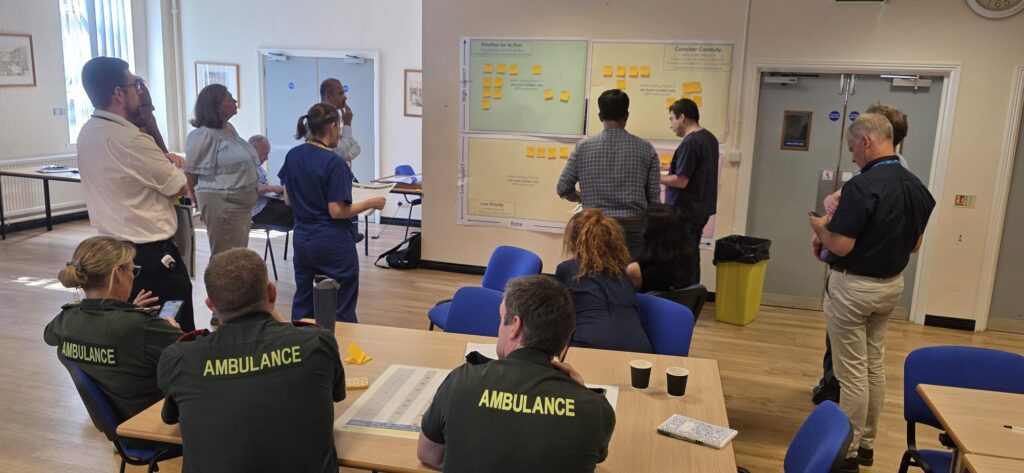
The ‘big room’ exercise was organised by the Trust’s Service Transformation team, as part of the Trust’s participation in NHS Elect’s Thrombolysis and Thrombectomy in Acute Stroke Care (TTASC) quality improvement collaborative.
St Richard’s Hospital joined Cohort Three of the national programme in April, with the aim of significantly improving access to the drugs that bust blood clots in the brain and the interventional radiology technique that mechanically removes them.
Dr Prasad Siddegowda, consultant in Stroke medicine and Senior responsible officer for the project, highlighted how vital thrombectomy in particular is for patient outcomes. He said: “If you look at all the procedures that we do in medicine, thrombectomy by far has the best evidence for treatment.
“It’s about 10 times better than PCI for a heart attack in cardiology and mechanically removing the clot can provide a level of life-changing transformation and improvement for patients that is very rare in medicine.
“So, it’s really worth us coming together as a multidisciplinary team to do all we can to improve our clinical pathways.”
However, Thrombectomy can only be provided from Comprehensive Stroke Centres at tertiary sites like Royal Sussex County Hospital or Southampton Hospital. And identifying which patients could benefit and be transferred requires a complex series of scans and specialist stroke care, and effective coordination between ambulance and ED teams, radiology and stroke care specialists, all against the clock.
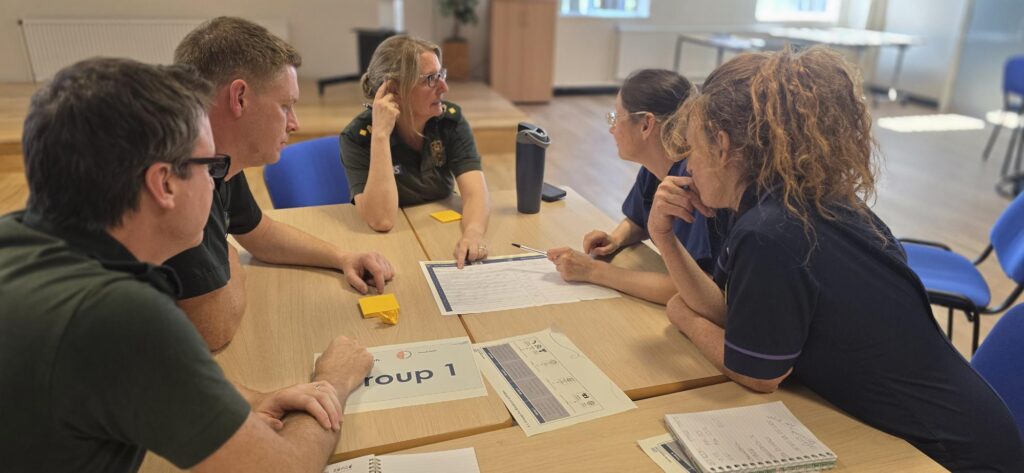
Paula Cooper, assistant director of Service Transformation, said: “We know that getting everyone in the same room and using lean improvement methodology is the best way to deliver change that sticks, swiftly and effectively. By breaking down traditional silos and asking each discipline to share their experience of the pathway with others, we were able to identify a series of improvements that will hopefully have huge impact for patients.”
The collaborative approach proved highly successful in identifying practical improvements. For example, teams analysed the Pre-Hospital Video Triage system, comparing the experiences of ambulance crews using the technology in the field with the hospital staff receiving the communications. This enabled the multidisciplinary group to develop solutions that will accelerate scans, treatment, and decision-making
Dr Ryan Watkins, who has led the Trust’s broader Stroke Improvement Programme in recent years, said: “The TTASC3 programme has come a long way in a short amount of time, and is building on significant quality improvement for stroke care at University Hospitals Sussex. This includes expanding access to thrombectomy treatment for patients to 24 hours a day, seven days a week, and the development of our new Acute Stroke Centre at St Richard’s. But instead of waiting for the new building to open next summer and then redesign our pathways, we’re bringing teams together now to ensure systems and processes are as effective as they can be now for our patients.”
The TTASC3 programme has ambitious targets for improvement. The aim is to increase Thrombolysis treatment from the current 9-10%, through the national average of 14% and towards 20% – a doubling of our local numbers. Similarly, for thrombectomy, the aim is to improve take-up from 4.5% to 10% – around 5% above the current national average.
Dr Siddegowda said: “Our ambitions align with the NHS long term plan, and with the support of the Service Transformation team and the NHS Elect, we are already making great progress. The ‘big room’ event, process-mapping, and multidisciplinary collaboration enabled us to find common ground and agree potential solutions swiftly, and that is very rare in my experience.
“I wish to thank everyone involved, including SECAmb, ED and Radiology colleagues, and Dr Simone Ivatts(clinical director for stroke). I’m grateful to Paula Cooper and Pete Soulsby from the Service Transformation team for their expert facilitation and lean improvement guidance. We still have a way to go, but we’ve made excellent progress in just a few weeks, and I’m looking forward to seeing what we can achieve for our patients by working together over the next year.”
To find out more about the TTASC3 programme or to get involved, please email Lead Continuous Improvement Project Manager, Peter Soulsby at [email protected].