A senior Sussex haematology research nurse has shared the emotional story of how blood donors helped save her three‑year‑old son’s life, and later supported her father through cancer treatment, as the NHS marks National Blood Week (9–15 June).
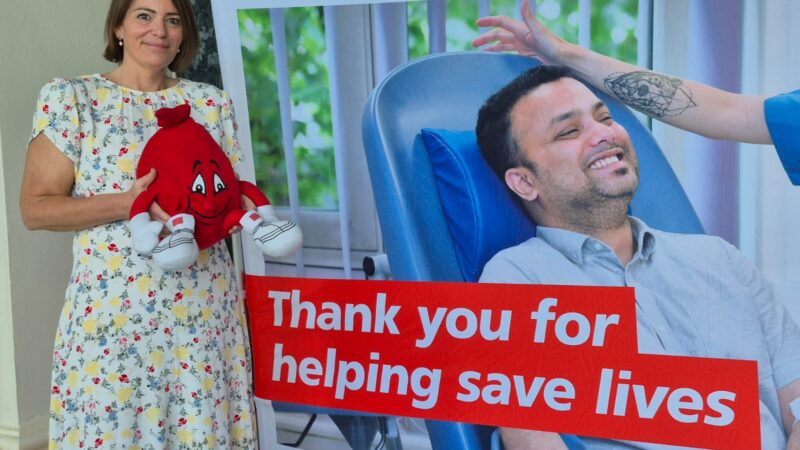
Kirsten King, senior research nurse at Worthing Hospital, addressed more than 300 donors at an NHS Blood and Transplant recognition event in Eastbourne recently, thanking them for the life‑changing impact of their generosity. For her, the message was deeply personal, and the event was much more than a professional engagement.
In May 2014, her son Peter was diagnosed with acute myeloid leukaemia (AML) aged just three years old. What initially appeared to be a childhood illness rapidly became a medical emergency. Within hours of arriving at hospital, Peter required his first blood transfusion after tests revealed dangerously low blood counts.
Over the following six months, Peter underwent intensive chemotherapy at the Royal Alexandra Children’s Hospital in Brighton, St George’s Hospital and The Royal Marsden Hospital. During his treatment he received numerous blood transfusions and blood products. “Peter relied on blood products throughout his treatment,” said Kirsten. “You could always tell when he needed a transfusion. He would become pale, tired and withdrawn. Afterwards, it was like somebody had switched the lights back on. The difference was remarkable. “As parents, we were focused on helping him get through each day. We never met the people who donated the blood that helped save him, but we will always be grateful to them.”
Today, Peter is a healthy 15-year-old who loves football, sport and spending time with friends.
A career transformed by care
Peter’s illness, the treatment and care that he received, changed the direction of Kirsten’s own life. At the time, she was working in local government. Inspired by the care her family received, she made the decision to retrain as a nurse, qualifying in 2019, before joining UHSussex. Now a senior research nurse, she leads the haematology research portfolio at Worthing Hospital, supporting patients with blood cancers and blood disorders to take part in clinical research studies. “Peter’s diagnosis was one of the most difficult experiences our family has ever faced, but it inspired me to pursue a career where I could help others. Through research, I have the opportunity to support patients today while helping develop better treatments for tomorrow.”
Supporting patients at every stage of life
Kirsten’s family has experienced the impact of blood donation from another perspective too. Several years after Peter’s treatment, her father was diagnosed with lung cancer. During his illness, blood transfusions became an important part of his care. “Like many cancer patients, my dad experienced anaemia as a result of his illness and treatment,” said Kirsten. “He often talked about the difference a transfusion made. He would go from feeling exhausted and struggling with everyday tasks to having the energy to spend time with family and enjoy the things that mattered most to him.”
Her father sadly died in 2018, but Kirsten says those experiences helped her understand that blood donation is about far more than emergency care. “I have been donating blood since I was 18 years old but it wasn’t until Peter was poorly that I realised blood isn’t just needed after accidents or during surgery, for many cancer patients blood transfusions are an essential part of treatment and supportive care. She added: “For some people, blood transfusions help them recover and continue treatment. For others, they improve quality of life and help them make the most of precious time with the people they love.”
Today, Kirsten works with patients whose treatment journeys continue to depend on the generosity of blood donors. “At work I am constantly reminded that behind every transfusion is a donor who chose to help someone they will never meet. That gift changes lives every day.”
Research driving better care
Research plays an important role in providing excellent care for patients with blood cancers and blood disorders, and as part of its new strategy, the Trust is committed to developing new and improved treatments for future patients.
At UHSussex, research teams are working to expand access to clinical trials and innovative treatments for local patients. Last year, 7,141 people took part in clinical research across our portfolio of 189 research studies, which includes cancer and haematology trials. To find out more about research at UHSussex please visit our research and innovation page. You can register to be contacted about taking part in clinical research.
Why blood donation matters
Around two-thirds of donated blood in England is used to treat medical conditions including cancer, anaemia and blood disorders. Blood is also vital for patients undergoing surgery, receiving emergency treatment or living with long-term health conditions.
Only around four per cent of eligible people currently donate blood. As National Blood Week shines a spotlight on the need for more donors, Kirsten hopes her family’s story will encourage others to consider giving blood. “Blood donation is one of the simplest ways people can make a difference. “My son is alive today because complete strangers chose to donate. My father benefited from blood transfusions during his cancer treatment. Every blood donor has the power to change someone’s story, and my family is living proof of that.”
Please donate if you can
NHS Blood and Transplant have a dedicated blood donor centre in Brighton, with evening and weekend appointments available. The centre is open 7 days a week and is located at 1 Gloucester Place opposite Valley Gardens. It is less than a 10 minute walk from the train station. Find out more, and to book an appointment through NHS Blood and Transplant at NHS Blood Donation. Your donation has the potential to change lives.