
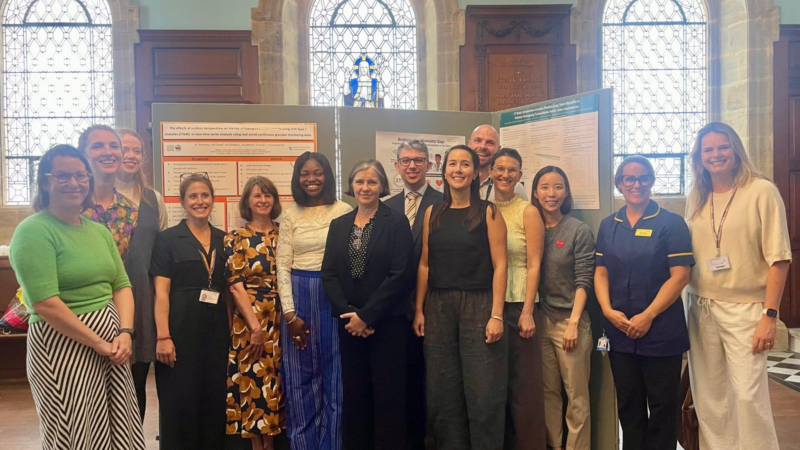
The power of research to improve patient care, tackle health inequalities and shape the future of healthcare was showcased during a visit to Sussex by one of the UK’s most senior health research leaders.
Professor Lucy Chappell, Chief Scientific Adviser at the Department of Health and Social Care (DHSC) and Chief Executive Officer of the National Institute for Health and Care Research (NIHR), together with colleagues from the DHSC spent the day with research leaders, clinicians and researchers from across Sussex to see first-hand how collaboration and innovation are helping more people benefit from research.
A key focus was the NIHR Commercial Research Delivery Centre (CRDC): Sussex, which is helping transform our region’s capacity to deliver industry sponsored research and widen access to clinical trials.
The NIHR CRDC: Sussex is one of 21 CRDCs across the UK. It is bringing together organisations across Sussex to provide more joined-up research delivery across industry sponsored research. Its ambitions include taking research into community settings and underserved areas, supporting more GP practices to become research active and increasing access to clinical trials for people with mental health conditions via a partnership with Sussex Partnership NHS Foundation Trust.
Building research across Sussex
The morning focused on the wider NIHR research infrastructure across Sussex and key research themes within Brighton and Sussex Medical School (BSMS), demonstrating how collaboration between NHS organisations, universities and other partners is strengthening our region’s research environment.
The visit showcased the strength of the region’s research partnerships and infrastructure, including the NIHR Applied Research Collaboration Kent, Surrey and Sussex and the NIHR Commercial Research Delivery Centre (CRDC): Sussex.
Professor Chappell met researchers from across UHSussex and BSMS to learn about areas of research excellence including global health, brain health, sustainable healthcare, infection, HIV and sexual health, critical care and hepatology. Discussions also highlighted efforts to support clinical academic careers, strengthen patient and public involvement in research, and advance ambitions for translational research across Sussex.
Professor Martin Llewelyn, Director of Research and Innovation at UHSussex and Director of NIHR CRDC: Sussex, shared progress since the CRDC launched in April 2025. The CRDC is already helping grow the research portfolio into new specialties, addressing health needs of local populations, strengthening collaboration between health and care organisations, and accelerating access to research for people across Sussex. It is also supporting the ambition to take more research beyond traditional hospital settings and into GP practices and communities, including coastal and rural areas, so that opportunities to participate are available to a broader and more diverse population.
Turning research into better care
In the afternoon, Professor Chappell visited the Royal Sussex County Hospital in Brighton, where she met UHSussex researchers from a diverse range of clinical specialties, and at different stages of their research careers. Among them were My Charity Research Fellows, who are being supported to develop as researchers while investigating questions that can make a tangible difference to patients.
The fellowships enable nurses, midwives, allied health professionals, pharmacists and doctors to work alongside patients to design and improve services. Their projects focus on issues that matter to patients and communities, including improving quality of life, widening access to care and reducing health inequalities.
Projects are already contributing to practical improvements in care across Sussex, including better support for people experiencing menopause following cancer treatment, more tailored care for people using drugs and alcohol during pregnancy, safer antibiotic prescribing and improved nutrition during cancer treatment.
By investing in staff as researchers, UHSussex is helping build a workforce that can identify challenges in everyday care, work with patients and communities to understand what needs to change and use research to develop and test better ways of delivering services. The fellowships are also strengthening research skills, confidence and connections between teams, helping to create a sustainable research culture where research and improvement become part of everyday clinical practice for the benefit of patients and our communities.
Research supported from the top
The afternoon demonstrated the breadth of research taking place across UHSussex and the growing number of colleagues interested in making research part of their careers, for the benefit of patients and communities.
That enthusiasm is backed by a clear commitment from Trust leadership. Chief Medical Officer, Professor Katie Urch, attended throughout the day, while Chief Executive, Andy Heeps joined the whole afternoon, spending time hearing directly from researchers about their work, experiences and ambitions.
UHSussex has made research a strategic priority in its Excellent Care Everywhere strategy, with research career development awards, dedicated research time for medical and non-medical clinical staff and research leadership and delivery roles now embedded across the organisation.
Together with the wider NIHR infrastructure being developed through NIHR CRDC: Sussex, this investment in people is helping create an environment where more staff can lead and contribute to research, more patients and communities can shape it and participate in it, and research findings can be translated into better care for local populations.
The visit provided an opportunity to demonstrate how far research in UHSussex has come and the shared ambition to ensure its continued growth delivers meaningful improvements in health and care for people across the region.