
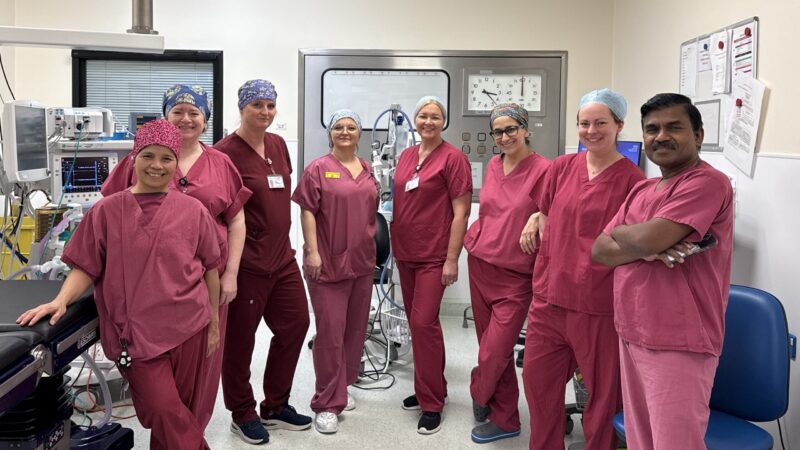
Patients with severe endometriosis could benefit from safer surgery in the future thanks to a new research study which has successfully tested an innovative technique to help prevent serious surgical complications.
The study, led by University Hospitals Sussex, forms part of its commitment to ensuring patients have access to research and to developing innovative approaches that improve care and outcomes across Sussex.
Dr Rebecca Mallick, Consultant Gynaecologist at University Hospitals Sussex and a nationally recognised specialist in complex gynaecology care, said:
“Surgery for severe endometriosis can be challenging because the scar tissue and adhesions can change the normal anatomy, making it much harder to identify structures such as the ureters. Anything that helps us see these structures more clearly during surgery is real step forward for patients.”
Endometriosis is an illness that occurs when tissue similar to the lining of the womb grows elsewhere in the body, often causing severe pain and affecting fertility. In some cases, patients require complex surgery to remove endometriosis tissue, cysts and scar tissue.
One of the most significant challenges during these procedures is identifying the ureters – the tubes that carry urine from the kidneys to the bladder. While ureter injuries are uncommon in routine surgery, the risk can increase to more than 20% in patients with severe endometriosis. This is due to the extensive scarring that has altered the body’s anatomy, which makes it harder for surgeons to identify and avoid the ureters.
To explore ways of reducing this risk, a medical team led by Dr Mallick conducted a research study involving 50 patients undergoing complex laparoscopic endometriosis surgery.
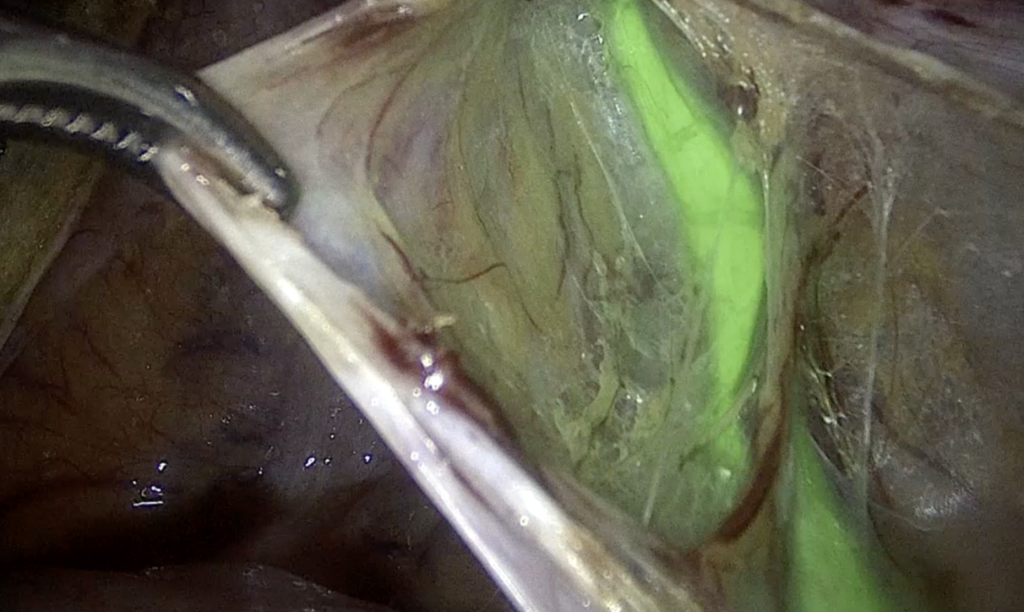
By placing a small amount of fluorescent green dye (intra-ureteric indocyanine green), which glows under near-infrared light directly into each ureter, surgeons were able to see the structures of the tubes clearly throughout the operation.
The technique took less than three minutes to perform and successfully highlighted the ureters in all 50 patients, with no complications associated with the procedure.
Dr Mallick, adds: “The green dye is a simple technique that takes just a few minutes to perform, but it has the potential to make a real difference. Being able to see the ureters clearly throughout an operation could help reduce the risk of injury and improve outcomes for patients undergoing complex surgery.
“These findings are promising. Our next step is to carry out further research to confirm the technique’s clinical and cost-effectiveness before it can be considered for future guidance and policy.”
Rebecca was recently elected as President of the British Society of Gynaecological Endoscopy (BSGE) and will be presenting the study findings at upcoming national and international conferences, helping to raise awareness and support wider adoption of this innovative approach.
With endometriosis affecting around one in ten women in the UK improving treatment options and surgical outcomes remains a key priority for University Hospitals Sussex.
Studies like this are helping the Trust ensure patients can access improved treatment options, better outcomes and offer hope that future generations living with endometriosis will benefit from an improved quality of life.