

Our book of the month for May:
It’s Not Ok To Feel Blue and other lies

by Scarlett Curtis
It’s OK if everything might feel a bit overwhelming.
It’s OK to talk about it.
It’s OK to not want to talk about it.
It’s OK to find it funny.
It’s OK to be human.
Over 70 people have shared their powerful, funny and moving stories exploring their own mental health, including Sam Smith, Emilia Clarke, Candice Carty-Williams and Adam Kay.
One in four of us will experience a mental health issue. This book is here to tell you, or someone you care about, it’s OK.
Our Journal of The Month:
BJPsych Advances – Continuing professional development in psychiatry
BJPsych Advances distils current clinical knowledge into a single resource, written and peer-reviewed by expert clinicians to meet the CPD needs of consultant psychiatrists. Each issue includes commissioned articles dealing with physical and biological aspects of treatment, psychological and sociological interventions, management issues and treatments specific to the different psychiatric subspecialties.

Articles discuss comprehensive, practical approaches to clinical problems and explain the full range of therapeutic options, with useful features like MCQs, summary boxes, and associated commentaries. BJPsych Advances is essential reading for practising mental health professionals who need to be kept informed of current ideas, techniques and developments in psychiatry.
Access this journal Contact us for helpThe ebook we’re highlighting this month is:
Artificial Intelligence in Cognitive Behavioural Therapy—A guide for mental health professionals
by Olive K L Woo
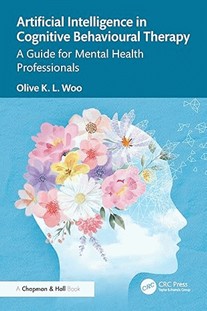
This book examines the transformative potential of integrating artificial intelligence (AI) with cognitive behavioural therapy. Tailored for mental health professionals, it offers evidence-based strategies and ethical frameworks for the potential adoption of AI in therapeutic practice.
Designed for readers with little or no understanding of AI, this book explores key concepts such as machine learning, natural language processing, and deep learning, in accessible ways, while demonstrating their potential applications in cognitive behavioural therapy. It addresses pressing ethical considerations, including algorithmic bias, data security, and the responsible integration of AI in mental health care. By balancing innovation with ethical rigour, this resource empowers readers to understand innovative approaches while maintaining the integrity of their practice.
This is an essential guide for clinical psychologists, counsellors, social workers, psychiatrists, educators, and researchers who want to explore the application of AI in cognitive behavioural therapy and stay at the forefront of therapeutic research and practice.
Access this ebook hereYou will need an OpenAthens account to view this book.
No account? No problem, you can easily register:
Register for OpenAthens Contact us for help