
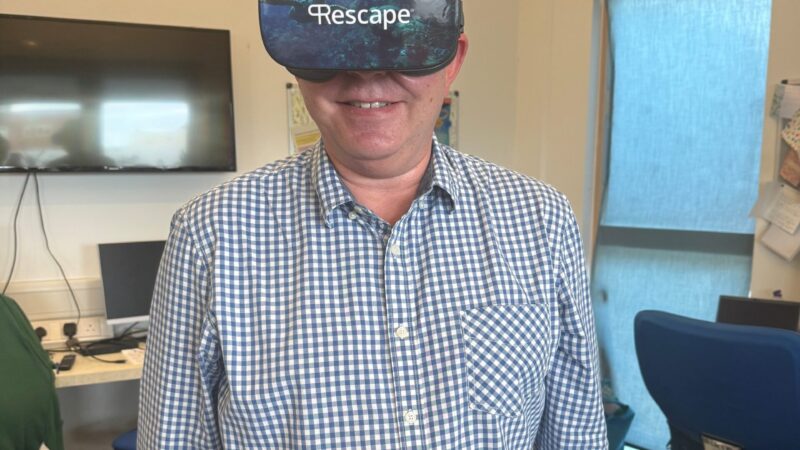
Researchers at University Hospitals Sussex NHS Foundation Trust (UHSussex) have helped demonstrate how virtual reality (VR) could become a valuable new tool for supporting people living with advanced cancer, with patients reporting reduced pain and improved wellbeing after using immersive digital experiences.
The research, which involved patients with advanced cancer using VR headsets in hospital and hospice settings, found pain scores reduced from a median of four to two while participants were using the technology. All participants said they would like to use VR again.
The findings are helping to build evidence for how VR could be used alongside existing palliative care approaches to help manage pain, reduce anxiety and improve quality of life for people living with advanced cancer.
Led by University College London and supported by the National Institute for Health and Care Research (NIHR), the trial brings together hospitals, hospices, patients and researchers from across the UK. It is one of many trials taking place in UHSussex hospitals and is part of the trust’s ambition to bring clinical research and treatments to people across Sussex.
The study reflects UHSussex’s Excellent Care Everywhere strategy, which aims to deliver high-quality, compassionate and innovative care across Sussex. Research plays a key role in achieving this ambition by giving patients access to new treatments and approaches that can improve their experience of care and quality of life.
Delivered via a VR headset, patients are immersed into a choice of calming digital places such as beaches, cities, walks and underwater environments. The headsets also offer interactive games. These visual experiences are designed to help ease patients’ symptoms by allowing them to escape clinical environments and focus their attention elsewhere.
For many patients, pain is one of the most distressing aspects of advanced cancer. Persistent pain can affect sleep, mobility, appetite, emotional wellbeing and the ability to spend meaningful time with loved ones. Alongside physical symptoms, many people experience anxiety, exhaustion, depression and isolation.
This research project is exploring whether VR could help patients manage some of these symptoms.
Cancer Research UK reports that more than 403,000 people are diagnosed with cancer every year in the UK. While survival rates continue to improve, many people are living longer with advanced cancer that requires ongoing treatment, symptom management and supportive care.
Why this research matters
More than half of people living with advanced cancer experience moderate or severe pain that is often difficult to control. Researchers involved in the project said there is growing recognition that medicines alone are not always enough to address the physical and emotional impact of serious illness.
While powerful opioid medications remain an essential part of cancer care, researchers are increasingly exploring non-drug approaches that can work alongside conventional treatments. VR is being investigated because immersive experiences may help distract attention away from pain, reduce anxiety and support emotional wellbeing.
As part of the research, 37 people living with advanced cancer used VR headsets and shared feedback about their experiences. Researchers found median pain scores reduced from 4 to a median of 2 while using VR, with all participants saying they would like to use the technology again.
Patients described becoming deeply immersed in the experiences, often temporarily forgetting about pain altogether.
One participant said: “I felt I can be completely lost and completely occupied with it… or completely forgot my problems”.
Others described the experiences as relaxing, emotionally uplifting and helpful for relieving boredom and anxiety. Some patients said the technology reminded them of holidays, meaningful places and positive memories.
Researchers also found VR could support wider wellbeing benefits beyond pain management, including relaxation, sleep support, gentle movement and social connection.
Helping shape the future of palliative care
The study has helped inform the development of one of the UK’s first practical guidance documents for hospitals and hospices looking to safely implement VR within cancer and palliative care settings.
The guidance draws on interviews with patients and staff, alongside an eight-week implementation phase across hospice and hospital environments. It outlines how clinical teams can safely introduce VR technology, personalise experiences for patients and ensure that appropriate emotional and clinical support is available.
Professor Ollie Minton, Consultant in End of Life Care and Palliative Medicine at UHSussex and co-lead of the study, said:
“Now we have the beginnings of an evidence base that we can build on. It is great that we can guide NHS teams to use VR successfully for pain, rather than it being purchased and left on the shelf. The project provides a strong foundation for future research into how VR could support patients living with advanced cancer.”
To find out more about research at UHSussex, please visit Research and innovation – University Hospitals Sussex NHS Foundation Trust
You can also sign up to NIHR’s Be Part of Research service to be contacted about research studies that you may be eligible to take part in.