
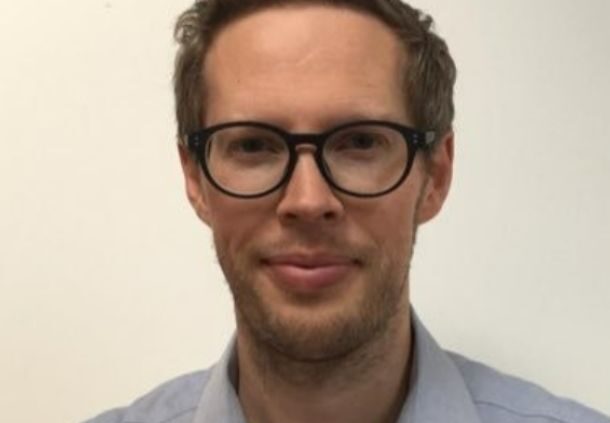
New research at University Hospitals Sussex (UHSussex) is helping improve understanding of the support stroke survivors need after leaving hospital and could influence how follow-up care is delivered across the NHS.
While advances in emergency treatment have significantly improved survival after stroke, many people continue to experience physical, emotional and cognitive challenges long after they return home. For many, recovery continues for months or years, and the support available during this time can have a significant impact on quality of life.
Dr Rich Holmes, an Advanced Clinical Practitioner (ACP) Physiotherapist at St Richard’s Hospital has dedicated his doctoral research to understanding how long-term follow-up care for stroke survivors can be improved.
Supported through an NIHR Doctoral Clinical and Practitioner Academic Fellowship, Rich’s programme of research explored six-month post-stroke reviews. These reviews are conducted as structured appointments and recommended nationally, to help identify ongoing rehabilitation, and health and social care needs after patients leave hospital.
Tim Pilcher, a stroke survivor from Angmering, commenting on Rich’s research work said: “After my stroke, leaving hospital felt like just the beginning of my recovery. Having someone check in, listen to how I was really coping and help me find the right support made such a difference. It’s reassuring to know research like this is helping improve care for future stroke survivors.”
Through a series of studies, Rich has examined how these reviews are delivered across England, what patients and healthcare professionals expect from them, and how they can be made more personalised, meaningful and effective in delivering support to stroke survivors.
His study, published in BMC Health Services Research, surveyed stroke services across England and found considerable differences in how six-month reviews are organised. While some services provide comprehensive holistic assessments, others have limited capacity or are unable to offer reviews at all, resulting in different experiences for patients depending on where they live.
Rich then explored these differences further through interviews with stroke survivors, carers, and healthcare professionals. Published in PLOS One, the study found that patients often value reassurance, emotional support and guidance about life after stroke, while clinicians may place greater emphasis on identifying clinical needs and coordinating ongoing care. Better understanding these different perspectives is now helping inform how services can be designed around what matters most to patients.
His work published in Springer Nature and involving structured post-stroke follow-up to identify and address the unmet needs of stroke survivors, highlights the importance of context in shaping how the six-month reviews are delivered by providers and how these are experienced by service users, highlighting the need for services to be adaptable and personalised to optimise performance.
Rich programme theory work published in Frontiers in Stroke, brings together evidence from across his research to explain how successful six-month reviews can be implemented within real-world healthcare systems and within policy. The work highlights the importance of flexible, person-centred approaches that can adapt to local services while maintaining consistent standards of care.
Alongside these publications, Rich has also contributed to wider research exploring implementation and evaluation of stroke review services, helping build a comprehensive evidence base to support improvements in long-term stroke care.
Dr Rich Holmes said: “As a physiotherapist working with stroke survivors, I’ve seen first-hand that recovery doesn’t stop when someone leaves hospital. Many people continue to experience physical, cognitive and emotional challenges months later, and their needs can change over time. This research has been about listening to stroke survivors, their families and the healthcare professionals who support them to better understand what makes follow-up care meaningful. We found that while six-month reviews are recommended nationally, they’re delivered very differently across the country, meaning patients can have very different experiences depending on where they live.
He added: “My hope is that this work helps services provide more effective, personalised reviews that identify the issues that matter most to patients and connect them with the support they need. Ultimately, the aim is to improve quality of life for people living with the long-term effects of stroke.”
At UHSussex, we’re committed to creating opportunities for our clinicians to lead research that addresses the challenges patients face every day. Research not only advances knowledge but helps ensure that patients receive Excellent Care Everywhere and that this care is informed by the best available evidence and designed around what matters most to them.
Professor Martin Llewelyn, Director of Research and Innovation at University Hospitals Sussex NHS Foundation Trust, said: “Rich’s work is an excellent example of how clinician-led research can make a real difference to patient care. By combining his frontline experience with rigorous research, he is generating evidence that has the potential to improve how stroke services are delivered across the NHS.”
Rich’s research is already helping inform discussions around how stroke follow-up services can be delivered more consistently, ensuring more people receive the ongoing support they need after leaving hospital. His work has also recently been shortlisted for the Chief Allied Health Professions Officer’s (CAHPO) Awards 2026 in the AHP Research Impact category.
As the work continues, it has the potential to influence future guidance and service development nationally, helping improve outcomes and quality of life for thousands of stroke survivors not just in Sussex but also across the UK.
Be a part of research
Today’s research helps to develop tomorrow’s treatments. You can sign up to be contacted about clinical research studies that you may be eligible to participate in at NIHR’s Be Part of Research.