
Research led by University Hospitals Sussex NHS Foundation Trust (UHSussex) and Brighton and Sussex Medical School (BSMS) has shown how putting parents at the heart of their baby’s care can improve outcomes.
Premature and critically ill babies are spending less time needing the most intensive levels of neonatal care after UHSussex introduced an innovative approach that places parents at the heart of their baby’s treatment. Published in the journal Children, the study evaluated the impact of Family Integrated Care (FICare) across the Trust’s neonatal services at the Trevor Mann Baby Unit at the Royal Sussex County Hospital and the Special Care Baby Unit at Princess Royal Hospital
FICare is built on a simple principle. Parents are not visitors to the neonatal unit. They are an essential part of their baby’s care team. The study has shown that when parents are supported to become equal partners in the care of their premature or critically ill baby, babies experience better outcomes while specialist NHS resources can be used more effectively.
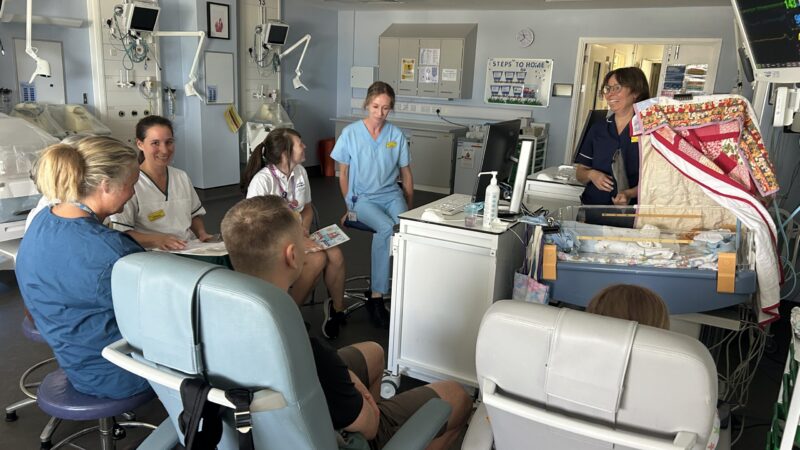
Rather than observing from the bedside, parents are encouraged to attend ward rounds, learn practical caregiving skills, take part in decisions about treatment and provide as much hands-on care as possible. They also receive education, psychological support and access to facilities that help them stay close to their baby throughout their hospital journey.
For parents of baby Nicholas, being involved in their son’s care transformed their experience. Nicholas’s father said: “Nothing prepares you for seeing your baby in intensive care. At first, it felt overwhelming, but the team involved us from day one. They taught us how to care for our baby, encouraged us to join ward rounds and always explained what was happening. Instead of feeling like visitors, we felt like parents again. By the time we went home, we felt confident because we’d been caring for our baby every day with the support of the neonatal team.”
Researchers compared outcomes for babies admitted in 2021, when FICare was first introduced, with babies cared for in 2024 after it had become fully embedded into everyday practice.
Professor Heike Rabe, Consultant Neonatologist at UHSussex and Professor of Perinatal Medicine at Brighton and Sussex Medical School (BSMS), said: “Having a baby admitted to a neonatal unit is one of the most stressful experiences a family can face. Family Integrated Care recognises that parents are essential members of the care team. When they are supported to care for their baby from the very beginning, we see benefits for everyone. Families gain confidence, babies benefit from the close involvement of those who know them best, and staff build genuine partnerships with parents.” She added: “Our findings suggest that babies can move through the highest levels of care more efficiently while parents feel much better prepared to continue caring for their baby after discharge. It shows that changing how we work with families can improve both clinical outcomes and their experience of care.”
The evaluation found that babies receiving FICare spent less time requiring high dependency care and respiratory support, including invasive ventilation and continuous positive airway pressure (CPAP). Although overall length of stay remained similar, babies progressed more quickly through the highest levels of neonatal care, allowing specialist resources to be used more effectively.
The study also found that the average cost of a baby’s neonatal stay reduced following implementation of FICare. While the research was not designed to demonstrate statistically significant cost savings, the findings add to growing international evidence that involving families more closely in care benefits babies, parents and healthcare services.
Parents shaping better care
The study forms part of RISEinFamily, an international research programme led by Professor Adelina Pellicer, from La Paz University Hospital in Madrid, Spain, as Chief Investigator, and funded through the European Union’s Horizon 2020 Research and Innovation Programme. Led by health economist Dr Natalia Hounsome at BSMS, the research team explored not only the clinical impact of Family Integrated Care but also how it influences the use of NHS resources.
Importantly, the programme has been developed with families at its heart. Parents’ experiences and feedback have helped shape how Family Integrated Care is delivered, ensuring the approach reflects what matters most to families during one of the most challenging times of their lives.
The research adds to growing international evidence that involving parents more closely in neonatal care strengthens parent-baby bonding, improves babies’ health and gives families greater confidence when they return home.
Research improving patient care
The findings reflect UHSussex’s strategic Excellent Care Everywhere commitment to embedding research into everyday clinical practice, so patients and families benefit from the latest evidence and innovation.
Professor Martin Llewelyn, Director of Research and Innovation at UHSussex, said:
“This study demonstrates how research can improve the experience of care as well as clinical outcomes. By working in partnership with families and embedding research into routine practice, we can develop approaches that are better for our patients, better for staff and make better use of NHS resources.”
As Family Integrated Care continues to develop across UHSussex, the team hopes these findings will help inform neonatal practice nationally and internationally, ensuring more families can play an active role in their baby’s care from the very beginning.