
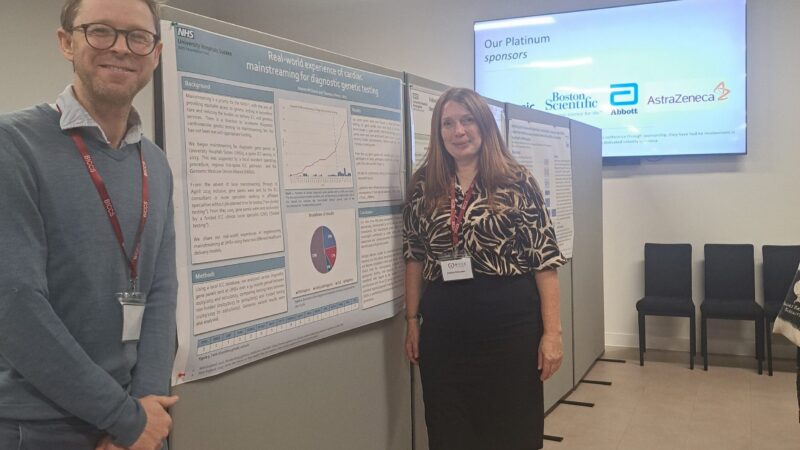
People at risk of having inherited heart conditions now have improved access to specialist family screening and genetic testing thanks to a dedicated service at University Hospitals Sussex, the first of its kind available locally across the South East.
Inherited Cardiac Conditions (ICC) are a group of disorders that are passed on through families. These conditions include hypertrophic cardiomyopathy (HCM), where the heart muscle becomes abnormally thick and makes it harder for the heart to pump blood, and dilated cardiomyopathy (DCM), where the heart’s main pumping chamber becomes enlarged and weakened.
In some cases, the first indication a person has an ICC is when they go to A&E with heart palpitations and breathlessness and can be seen and treated by the cardiology team. In rarer but more serious cases, it can be through sudden cardiac death.
In the UK it’s estimated that inherited heart conditions affect around 340,000 people [Heart Research UK]. Some may never experience symptoms, while others may develop serious complications such as arrhythmias, heart failure, or sudden cardiac death.
Moving away from reactive treatment and towards proactive prevention, the ICC service supports the NHS 10 Year Health Plan and its commitment to delivering healthcare long before a long-term condition is diagnosed or an emergency occurs.
Identifying people at risk as early as possible is vital. Cardiac screening, and in some cases genetic testing, for family members, particularly teenagers and young adults, can help identify inherited heart conditions before symptoms appear. Early detection enables timely treatment, ongoing monitoring, and preventive care, significantly reducing the risk of serious complications and improving long-term outcomes.
The ICC service was established at UHSussex by Consultant Cardiologist Dr Tommy Alway, who was later joined by Heart Failure Specialist Nurse, Jo McQueen. Together, they have developed pathways to improve diagnosis, streamline referrals and ensure patients and their relatives receive timely specialist care.
Dr Tommy Alway said: “A key part of the service is providing care for whole families and not just for individuals, through a formal programme of family screening and genetic testing. There can be a huge amount of anxiety for family members waiting to be investigated for inherited conditions, so providing timely and streamlined access to these specialised tests is helping to make a difference for families in Sussex.”
Family screening
Once a patient has been diagnosed with an inherited cardiac condition, the team works with them to create a family tree and identify first-degree relatives, such as parents, siblings and children, typically between 16 and 60, who may also be at risk.
With the patient’s support, relatives are invited for specialist screening, which typically include an electrocardiogram (ECG) to assess the heart’s electrical activity and an echocardiogram (echo) to examine the heart’s structure and function.
Around 300 relatives have been screened through the service, with 25 family members found to have features of the familial condition. For those found to have an ICC, or who are identified as being at increased risk, the service provides prompt treatment and lifelong monitoring, helping to reduce the risk of complications.
Individuals considered to be at particularly high risk of sudden cardiac death are offered an implantable defibrillator, a life-saving device designed to detect and treat dangerous heart rhythms.
Those with no evidence of disease often continue to be monitored, as some conditions can develop later in life.
The team has worked closely with the ICC team at Guy’s and St Thomas’ NHS Foundation Trust, drawing on their expertise and support to develop a high-quality service and providing access to specialist advice for more complex cases.
Genetic testing
Ensuring fairness in access to genomic testing across England is another NHS 10 Year Plan ambition. Alongside family screening, affected patients are often offered a genetic test where a blood sample is analysed to look for a specific genetic change that has caused their condition. If one is identified, relatives can then be offered a ‘predictive’ genetic test to see whether they are at risk of developing the condition themselves.
Jo, who leads on genetic testing for the service, said: “For many patients, the driver for genetic testing is to help identify whether other family members could be carriers and at risk of developing the condition too. It is possible for a family member to carry a faulty gene but not develop the condition, but for those at risk, we can keep a close eye on them with regular scans, so that any signs of the condition can be picked up and treated early.”
More than 200 genetic tests have been carried out since the service began, with more than one third returning a positive result.
Before the introduction of the service, many families had to travel to London to access genetic testing. Patients living across Sussex and the wider South East can now be tested closer to home through clinics in Chichester, Worthing, Haywards Heath, Brighton and Lewes.
The results can help confirm a diagnosis, guide treatment decisions and identify relatives who may also be at risk, enabling earlier detection and preventative care, for patients just like Katie and her family.
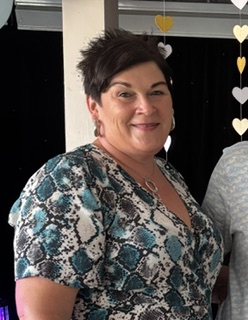
Katie, 51 from Lancing first thought something was wrong when she started waking up in the night feeling like her heart was racing. After a visit to A&E that led to several weeks in hospital after becoming unwell, Katie was diagnosed with hypertrophic cardiomyopathy (HCM).
She said: “All I heard was the word ‘genetic’. In that moment, my only thought was for my children and what it would mean to them.”
Katie had a miniature defibrillator fitted to prevent any further abnormal heart rhythms. She joined a local support group in Brighton run by Dr Alway and Jo, who was able to reassure Katie and helped co-ordinate genetic testing for all three of her children despite them living in different parts of Sussex.
She said “My eldest son Michael is only 23 but he’s already had a few funny turns. Genetic testing has revealed that he too has the same genetic change as me and has hypertrophic cardiomyopathy. It’s unimaginable to think how we would have navigated this complex process and pathway without Jo’s support. Thanks to Jo, Michael now has a diagnosis and can start to get the care that he needs.”
The ICC service continues to expand, and plans are underway to introduce a physiologist-led screening programme at the Community Diagnostic Centre (CDC) at Southlands Hospital.
The new service will focus on relatives of patients diagnosed with HCM and DCM. Relatives will be able to attend a single appointment for an ECG and echocardiogram screening and be told if they have features of the condition on the same day.
Alongside the ICC service, both Jo and Dr Alway run a support group in their own time, on behalf of Cardiomyopathy UK, for people with any form of cardiomyopathy, their family members, friends and supporters. This October, the pair are also hosting a regional roadshow in Brighton with the charity, bringing local health and social care professionals together with people affected by cardiomyopathy to learn and connect.