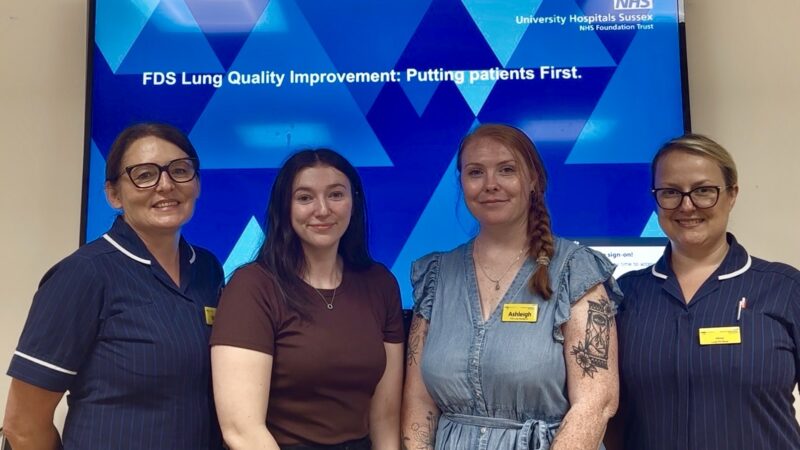
A team at University Hospitals Sussex has been shortlisted for a national nursing award in recognition of its work to ensure patients undergoing lung cancer diagnosis have the best possible experience by giving them fast access to diagnostics and supporting them throughout their investigations.
The Faster Diagnosis Service (FDS) for lung cancer has been shortlisted in the Ingrid Fuchs Cancer Nursing Award category at the Nursing Times Awards, which celebrate individuals and teams delivering innovative, patient-centred and inclusive care, in recognition of the significant impact they have made on lung cancer diagnostics and patient support.
Being referred for suspected cancer can be an anxious and uncertain experience for patients and their families. For those undergoing lung cancer investigations, this often involves multiple appointments and diagnostic tests taking place within a short period of time, adding to the emotional and practical challenges they face.
The Lung FDS has transformed the diagnostic pathway to make it not only faster and more efficient, but also more compassionate, coordinated and centred around patients’ needs.
Anna Makola, Faster Diagnostic Nurse (Lung) said: “Early diagnosis is our priority; nevertheless, keeping patients informed and reassured can significantly improve their experience while they wait for a diagnosis. By providing clear communication and emotional support throughout the process, we help reduce patient anxiety and enhance their overall journey, regardless of the eventual outcome. So far patients and our colleagues feedback have been encouraging.”
The lung multidisciplinary team, made up of patient pathway coordinators and specialist nurses, reviewed the challenges patients face during the diagnostic process, including the emotional impact of a suspected cancer diagnosis, awaiting investigations and the demands of attending numerous appointments in quick succession.
To help speed up investigations, the team introduced nurse-led haemoptysis (coughing up blood) clinics and same-day spirometry tests (used to diagnose and monitor lung conditions), allowing patients to access key diagnostic investigations more quickly.
Recognising that communication is just as important as timely testing, the team also introduced follow-up telephone calls after multidisciplinary team discussions, ensuring patients receive results and next-step information promptly and clearly. This has helped patients feel better informed throughout the diagnostic process while reducing anxiety and uncertainty.
More recently, the service launched a pilot smoking cessation programme, giving patients access to support to quit smoking from the day of their first appointment.
For patients experiencing significant anxiety, FDS nurses attend invasive procedures alongside them, providing reassurance and a familiar face at what can be a difficult time. Importantly, patients who receive a non-cancer diagnosis continue to receive support, ensuring they do not feel forgotten once cancer has been ruled out.
The Lung FDS patient pathway coordinators are often the first point of contact for patients entering secondary care. They provide continuity throughout the diagnostic journey, coordinating appointments and investigations while offering a consistent source of information and support for patients, families and carers.
Meanwhile, the FDS nurses combine specialist respiratory expertise with cancer care training to provide both clinical and emotional support. From the first appointment through to diagnosis, they meet patients in person, run telephone clinics and help coordinate investigations, ensuring every patient receives personalised care throughout their journey.
Sharla Elder, Faster Diagnostic Nurse (Lung) said: “We are absolutely delighted and deeply honoured to be shortlisted for the Ingrid Fuchs Nursing Times Award. It is a proud and humbling moment for our team, and we are grateful that our collective commitment to compassionate, high-quality care has been recognised alongside so many inspiring finalists.”
This model has already been successfully introduced at both St Richard’s and Worthing hospitals, improving pathway coordination, patient experience and the quality of care. There are plans to expand this approach across the Trust’s remaining sites, helping to ensure patients receive the same high standard of care regardless of where they are treated.
Winners of the Nursing Times Awards will be announced at a ceremony in October.