
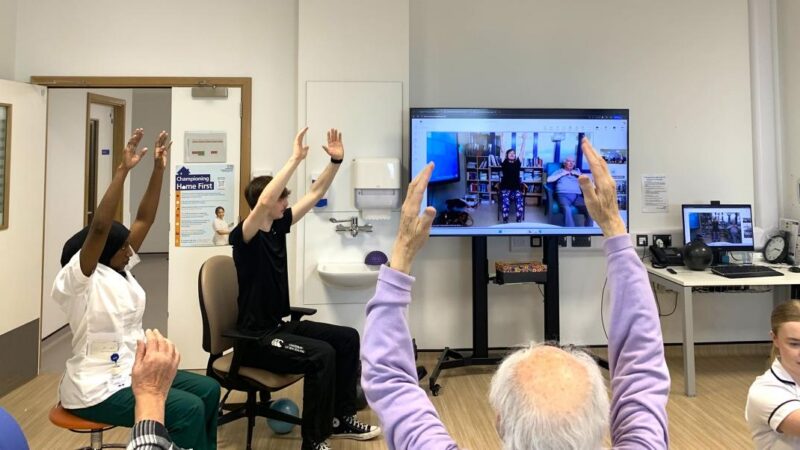
Stroke patients at the Royal Sussex County Hospital are experiencing faster and better recovery thanks to a new virtual exercise programme that helps prevent deconditioning during their hospital stay and beyond.
Launched in November 2025 as part of the Stronger for Life in Hospital initiative, the programme delivers live, instructor‑led exercise classes directly to the hospital’s Acute Stroke Unit. The sessions support mobility, strength and independence – all of which are critical in the early days after a stroke.
Karen Poole, AHP Rehabilitation Consultant at East Sussex Healthcare NHS Trust, where the project initially launched, led on this work.
She said: “We were delighted that colleagues from the Acute Stroke Unit at the Royal Sussex agreed to be a pilot site for the Active Sussex ‘Stronger for Life’ Phase 2 project.
This initiative is connecting acute and community healthcare sites across Sussex through virtually delivered activity sessions.”
Taking part in the virtual exercise can minimise the time patients spend in the Stroke Unit, enabling earlier discharge.
During a recent virtual session, patients took part in an hour‑long class using hand weights, resistance bands and exercise balls, supervised by the rehabilitation therapy team, Darine Alem, Matilda Southon, and student Connor Devlin.
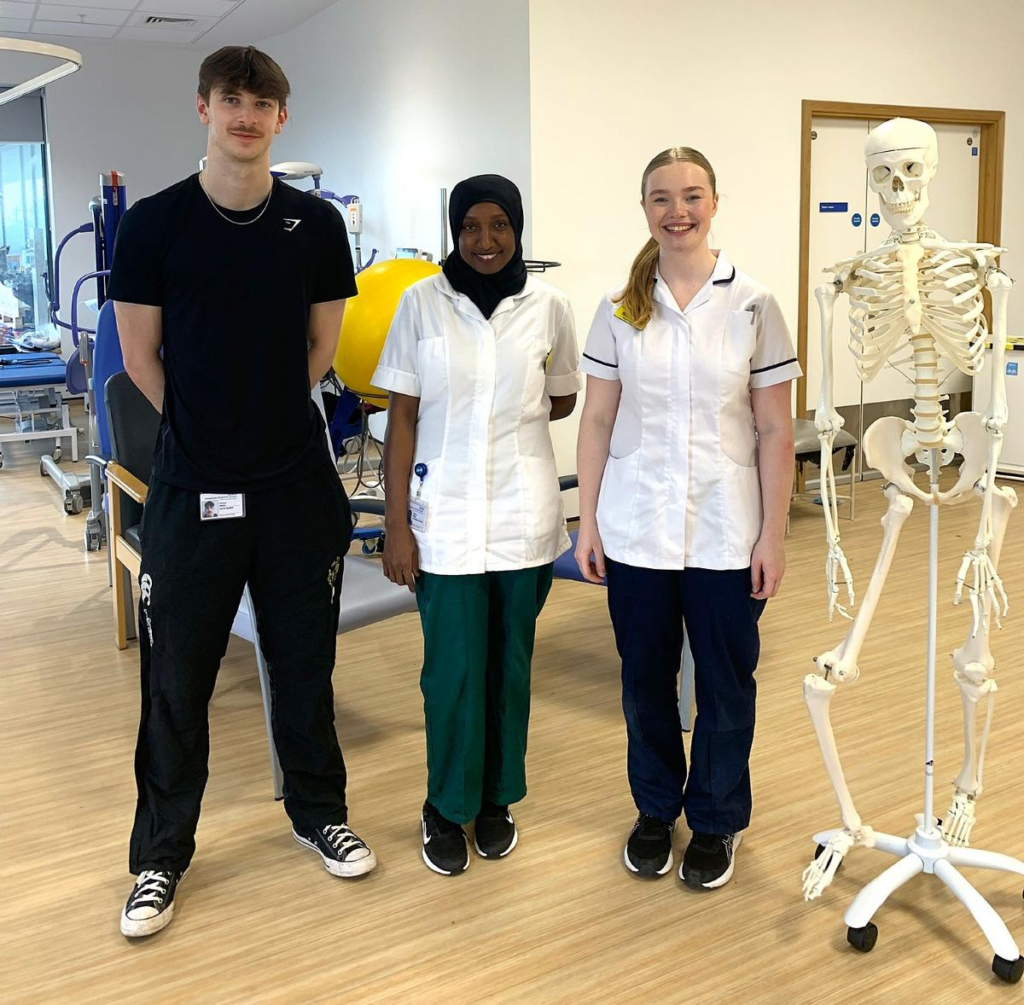
Darine Alem, Rehabilitation Assistant at University Hospitals Sussex, said: “The benefits of having a live stream in multiple locations have been good because more people can take part, and only one personal trainer is needed. This way, we can engage more patients and do a wider range of varied exercises.”
Deconditioning can occur rapidly following a stroke due to reduced mobility and prolonged periods of inactivity during the early phase of recovery. This can lead to a reduction in muscle strength and cardiovascular issues. Being active is fundamental to the recovery process and critical in the days following a stroke.
“These sessions don’t just help with deconditioning; they also provide psychological support and encourage the patients to participate in other activities that they can enjoy, and they can continue these exercises when they get home.” Darine adds.
Following discharge, the rehabilitation therapy team will continue providing personalised support within patients’ homes to help them stay active and maintain independence.
This project reflects UHSussex’s commitment to delivering excellent care everywhere, empowering patients through rehabilitation that supports long-term recovery and participation in their communities.