
What is this information about?
This information is about biomechanics for pregnancy and birth.
In this information, biomechanics means how the muscles and ligaments in your pelvis work. The positions aim to stretch and relax these muscles and ligaments. This may give your baby more room to move into a good position for birth.
It explains:
- how the muscles and ligaments in your pelvis may affect your baby’s position
- when biomechanics may help in pregnancy or labour
- how to use each position or method
- when you should not use a position or method
- which positions may suit different points in pregnancy or labour.
Why have I been given this information?
Your baby needs to move through your pelvis for birth in a good position. Tight muscles or ligaments in or near your pelvis could make it hard for your baby to turn with ease. These positions stretch and relax the ligaments in your pelvis. This may give your baby more room to move into a good position for birth.
You can use biomechanics in pregnancy:
- to make the best use of the space in your pelvis as you get ready for labour and birth
- in labour if labour is slow or has stopped
- if you have back or pelvic pain
- if your baby may not be in a good position.
Be aware,
you do not need to use biomechanics if labour is going well.
Biomechanics techniques
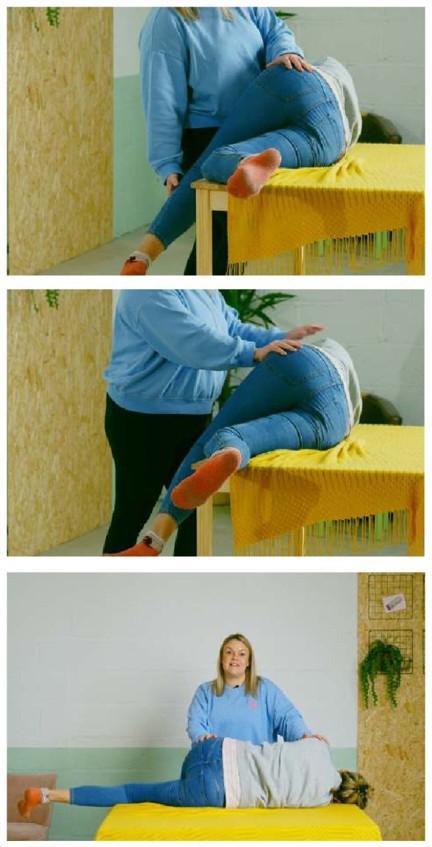
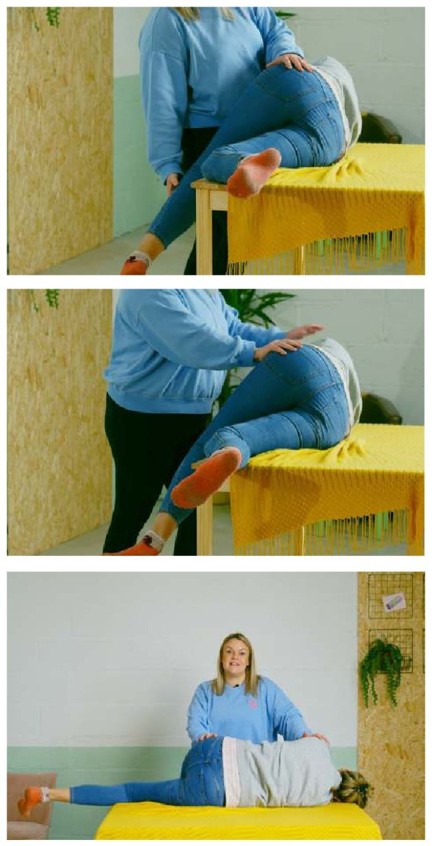
Side-lying release
How do I use a side-lying release?
A side-lying release is a still stretch for the deep muscles in your pelvic floor. The aim is to help balance your pelvic floor.
When may it help?
It may help with:
- a baby that is not in a good position (malposition)
- labour that has stopped
- slow labour.
When should I not use it?
Do not use it if you have:
joints that move more than usual (hypermobility)
Ehlers-Danlos syndrome. Ehlers-Danlos syndrome (EDS) is a rare condition that affect the tissue that supports your joints, skin and other parts of your body. It can cause joints to move more than usual bad pelvic or back pain.
What do I do?
- Lie on your chosen side at the edge of the bed. Keep your shoulder, neck, back and head in line.
- Ask someone to stand in front of you to give support. Keep your pelvis straight. Do not let it tilt or lean.
- Let your top leg hang over the bed. Point your toes up.
- Stay in this position for 5 to 10 minutes on each side, or for 3 contractions.
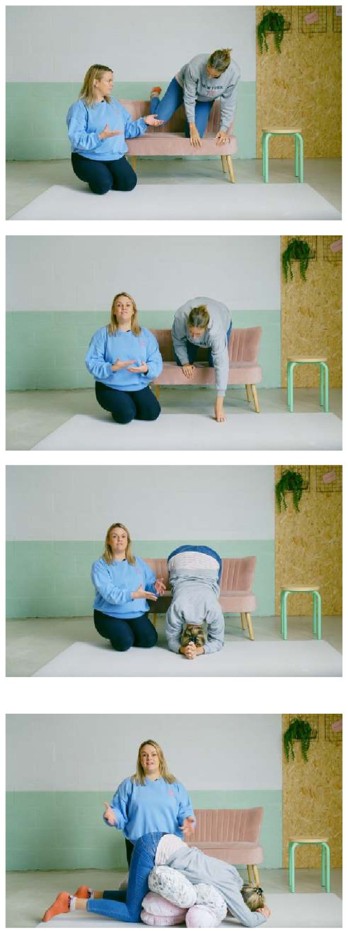
Forward leaning inversion
How do I use a forward-leaning inversion?
This position makes more space in the lower part of the womb by stretching the ligaments that link the womb to the back of the pelvis (uterosacral ligaments).
When may it help?
It may help with:
- back pain
- a baby that is not in a good position (malposition)
- slow labour in the early, first or second stage.
When should I not use it?
Do not use it if:
- your waters break while your baby’s head is still high
- you have high blood pressure (hypertension)
- you have too much fluid around your baby (polyhydramnios)
- you have a higher chance of stroke
- you have glaucoma.
What do I do?
- Kneel on a chair, sofa or bed.
- With care and help from a partner, lower your forearms to the floor.
- Point your bottom up. Let your head hang down on its own.
- Stay in this position for 30 seconds or 3 breaths.
- Come back up to a kneeling position.
- If you are in hospital, think about using a hospital bed in a similar way.
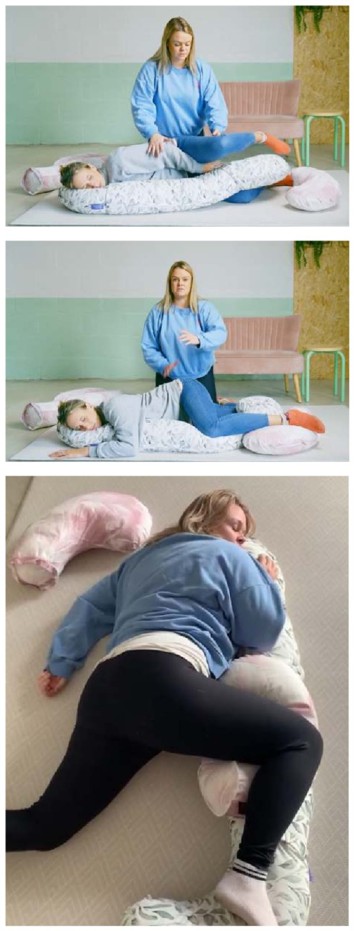
Exaggerated side-lying (lateral) position
How do I use an exaggerated side-lying position?
This position stretches the ligaments and lets you rest.
When may it help?
It may help with:
- a baby that is not in a good position (malposition)
- slow labour
- early labour
- helping your baby move down into the pelvis (engagement).
When should I not use it?
Most people can use this safely. Ask your midwife if you are unsure.
What do I do?
- Lie on the side away from your baby’s back. For example, if your baby’s back is on the left, lie on your right side.
- Start on your side, then lean towards your front. Use pillows to support your abdomen (tummy), knees and ankle. Put your lower arm behind you and your upper arm in front.
- Keep your hips at an angle.
- Rest in this position for 30 minutes, between times when you move around.
- If you do not know which side your baby is lying on, use both sides.
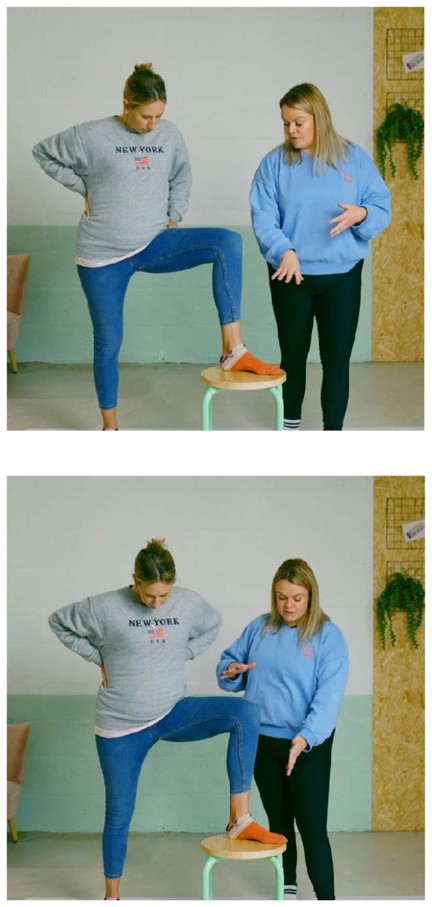
Elevated side lunge
How do I use an elevated side lunge?
This position may help your baby turn and may open the middle and lower parts of your pelvis.
When may it help?
It may help:
- when your baby is in the middle or lower part of your pelvis
- in the first or second stage of labour
- when progress is slow
- when your baby’s head is tilted to one side (asynclitic) or in a sideways position (OT).
When should I not use it?
Most people can use this safely. Ask your midwife if you are unsure.
What do I do?
- Put one foot on a chair. Point your toes away from your body.
- Lean or rock towards your knee.
- Do not let your knee move too far over your foot.
- Use this position during strong contractions.
- Put your foot down between contractions.
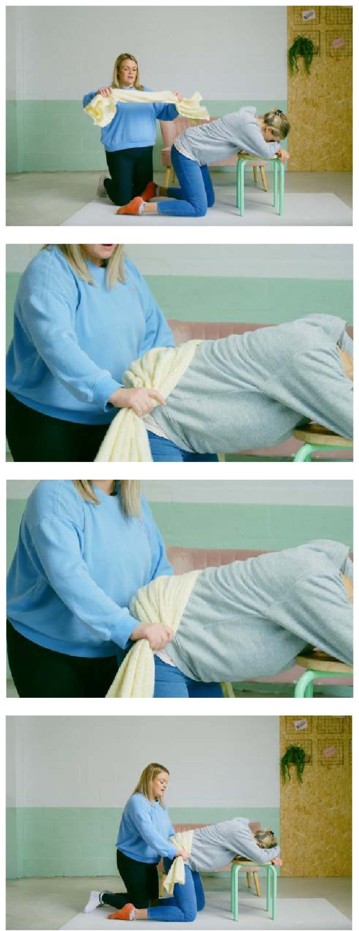
Shaking the apple tree
How do I use shaking the apple tree?
This method aims to relax the large muscles linked to your pelvis. The soft shaking may ease tightness, give your baby more space and boost blood flow.
When may it help?
It may help to:
- ease back pain
- help you relax
- help when progress is slow
- help when your baby is not in a good position (malposition).
When should I not use it?
Most people can use this safely. Ask your midwife if you are unsure.
What do we do?
- Get on all fours. Put your hands on the floor or lean on a chair or sofa.
- Ask your partner to spread a rebozo, scarf or blanket over your lower back and bottom.
- Your partner holds both sides firmly, with the cloth over your bottom and lower back.
- Your partner moves the cloth with care from side to side to make a soft shake.
- Most people giving birth will not want this during a contraction.
Sifting
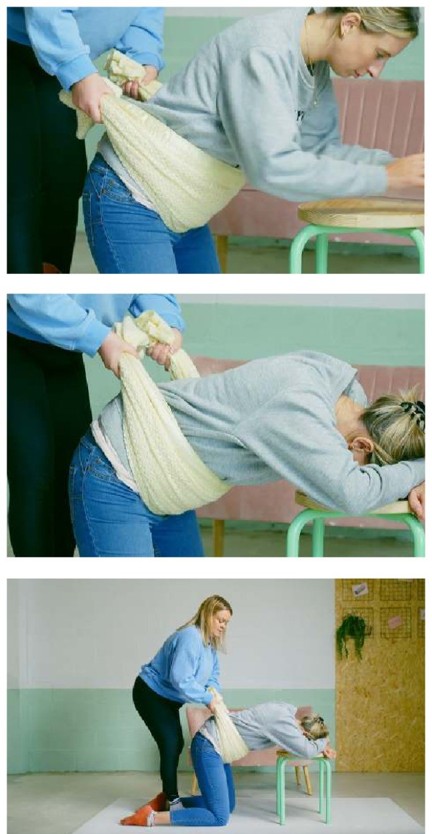
How do I use sifting?
This method aims to relax the large muscles in your abdomen that link to your pelvis. The soft shaking may ease tightness and give your baby more space.
When may it help?
It may help to:
- help your baby move down
- help you relax
- help when progress is slow
- help when your baby is not in a good position (malposition).
When should I take care or not use it?
Take care if your placenta is at the front of your womb (anterior placenta).
Do not use it if you have bleeding before birth (APH) or a past history of bleeding.
What do we do?
- Get on all fours. Put your hands on the floor or lean on a chair or sofa.
- Ask your partner to spread a rebozo, scarf or blanket under and around your bump.
- Your partner holds both sides firmly, with the cloth under your bump.
- Your partner moves the cloth with care from side to side to make a soft shake.
- Most people giving birth will not want this during a contraction.
Abdominal (tummy) lift and tuck
How do I use an abdominal lift and tuck?
This method aims to help your baby bend the head forward, move into the pelvis and move down. Use it when you have contractions and your baby’s head is high.
When may it help?
It may help when:
- your baby’s head is high
- your baby’s head is not bent forward (deflexed).
When should I not use it?
Do not use it if your waters have broken on their own (SROM). Stop if your baby moves too much.
What do we do?
- Stand and tilt your pelvis back. Tuck your bottom in and make your lower back flat.
- Ask your partner to stand behind you and place both arms under your bump.
- During a contraction, your partner lifts your bump by a few centimeters.
- Repeat this for 10 contractions in a row.
Which positions may suit different points in pregnancy or labour?
Key:
- Shows a suitable position for the situation
- Shows a recommended position for the situation
An empty cell (box in the table) denotes:
- that a position may not help in that situation or
- there is no reliable, published information to support a recommendation.
| Situation (point in pregnancy or labour) | Suitable position | When? | Recommended position |
| Baby is back-to-back in pregnancy, or you want to make the best use of your pelvis | Side-lying release | weekly from 32 weeks | |
| Exaggerated side-lying | daily from 32 weeks | ||
| Forward-leaning inversion weeks | daily from 32 weeks | ||
| Sifting | daily from 32 weeks | ||
| Shaking the apple tree | daily from 32 weeks | ||
| Back pain in pregnancy | Forward-leaning inversion | daily from 32 weeks | |
| Exaggerated side-lying | daily from 32 weeks | ||
| Side-lying release | weekly from 34 weeks | ||
| Sifting | daily from 32 weeks | ||
| Shaking the apple tree | daily from 32 weeks | ||
| Back pain in early labour or labour | Forward-leaning inversion Exaggerated side-lying Side-lying release Sifting Shaking the apple tree | ||
| Long latent phase | Forward-leaning inversion Exaggerated side-lying Side-lying release Sifting Shaking the apple tree | ||
| Past your due date | Side-lying release Sifting Shaking the apple tree | Forward-leaning inversion Exaggerated side-lying | |
| Baby is asynclitic or not in a good position in the middle of the pelvis | Forward-leaning inversion Exaggerated side-lying Side-lying release Sifting Shaking the apple tree | Elevated side lunge | |
| Baby is back-to-back in labour | Forward-leaning inversion Exaggerated side-lying Sifting | Side-lying release Shaking the apple tree | |
| Baby’s head is high in labour | Exaggerated side-lying Sifting | Side-lying release Abdominal lift and tuck | |
| Slow progress or active labour has stopped | Forward-leaning inversion Exaggerated side-lying Sifting Shaking the apple tree Elevated side lunge | Side-lying release | |
| Long pushing stage | Exaggerated side-lying Side-lying release Sifting Shaking the apple tree | Elevated side lunge |
Where can I find further information or support if I need it after I have read this information?
Please speak with your midwife.
The information in this leaflet is based on information produced by Bump to Baby Chapter the bumptobabychapter.co.uk and is used with their kind permission.
The information in this leaflet is for guidance purposes only and is in no way intended to replace professional clinical advice by a qualified practitioner.
Today’s research is tomorrow’s treatments. That’s why UHSx is proud to be a research-active Trust. Find out how you can get involved.
Visit our website www.uhsussex.nhs.uk/research-and-innovation/information-for-patients-and-public or scan the QR code: 