
What is this information about?
This information is about having a spilt skin graft, which is when a piece of skin is taken from one part of your body to cover a wound and help it to heal.
It explains why you need a skin graft, what happens when you have a skin graft, and how to look after your skin graft and donor site (the part of your body the skin was taken from). It also includes signs to look out for that may mean you have an infection, and what to do.
Why have I been given this information?
You have been given this information because you will be having, or have had, a skin graft to cover a wound.
This means that you will have two sites to look after on your body. Reading the advice here, and following the instructions given, will give you the best chance of recovering quickly and safely.
Keep this information in safe place so you can refer to it when you need to. You can also share it with anyone living with you or looking after you.
Why do I need a skin graft?
A skin graft is to replace damaged skin (tissue). You may need to have a skin graft if you have suffered a trauma, a burn or a wound that needs reconstructive or plastic surgery
What is split skin graft (SSG)?
A skin graft is a very thin shaving of your own skin, taken from one part of your body (the donor site) and placed over a wound to help it heal.
It includes the top layer of skin (the epidermis) and a small part of the deeper layer (the dermis).
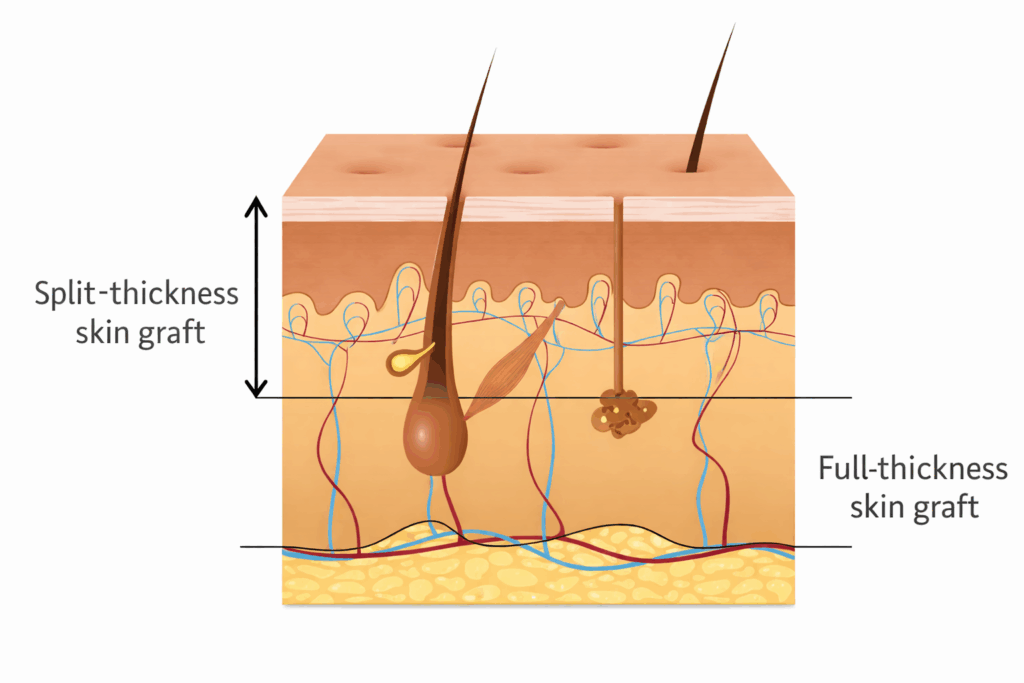
Why do I need a skin craft?
In some cases, a wound is too large or too tight for the edges to be brought together and stitched. When this happens, a skin graft is a good way to close the wound.
Skin grafts still take a few weeks to heal, but this is much quicker than leaving the wound to heal on its own without any help.
What are the benefits of having a skin graft?
- Help to heal the area quicker.
- Help reduce pain and discomfort when your dressing is changed.
- Help to reduce the risk of infection.
- Cover an area that has lost skin.
- Improve healing prospects even if skin graft only partly takes.
What should I expect after my skin graft?
The plastic surgery team will complete a dressing check at 5 to 7 days to assess the skin graft and to see if it has ‘taken’. This can be done either in hospital or at your follow-up appointment after you have gone home, depending on the injury.
The donor site (where the skin graft comes from) will also be checked and the dressing changed and replaced if needed. This dressing is in layers. The bottom layer remains in place and will come away on its own. This takes a few weeks.
How should I care for my skin graft?
Keep it clean
- Leave the dressing in place until the plastics team remove or change it.
- Do not get the dressing wet.
- Avoid places with high levels of dust, dirt or pet hair.
- Use a waterproof sleeve for showering. You can scan the below QR code for more information on waterproof sleeves.

Movement
- Try not to stretch, pull or move the skin graft area.
- If the graft is on a limb (an arm or a leg), elevate (raise) the limb to reduce swelling.
- If the graft is on your leg, avoid long periods of standing.
- Daily activities should be increased gradually over two to three weeks.
Dressings
- Your graft will have a firm dressing to prevent rubbing and movement.
- Larger skin grafts have a vacuum dressing applied to help the skin graft adhere (stay in place). This will be looked after by your nurses and doctors.
- Let the plastic surgery team know of any concerns or changes with the dressing.
What will the graft look like?
At first the graft will look a different colour to the rest of your skin, usually dark reddish or purple. This depends on your skin tone. This may take up to 2 years to fade and become paler. For some people, the graft may never be the same colour as the rest of their skin.
The skin graft may not feel as smooth as the rest of your skin. Given time this may improve, but will never be the same as the skin was before the grafting.
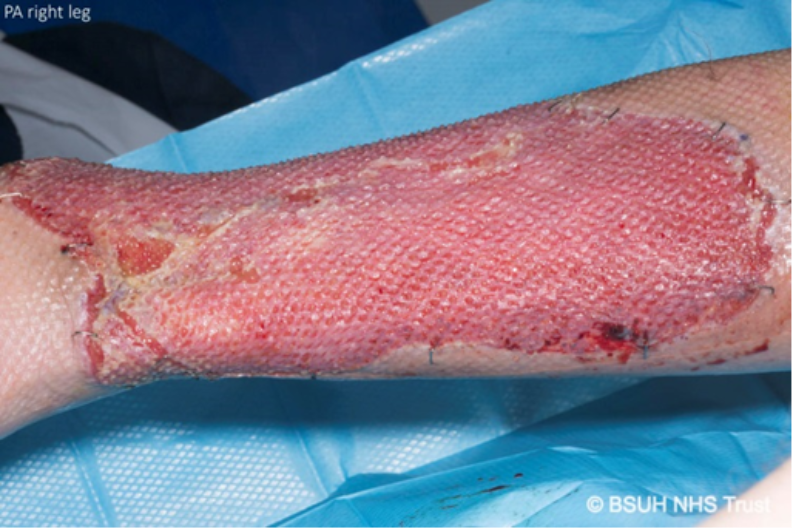
What are the risks associated with a Split-Thickness Skin Graft (SSG)?
A skin graft needs a healthy wound bed to grow into because it does not have its own blood supply. As new blood vessels grow and support the graft, it begins to stick down and heal. This is called graft take.
Sometimes, this process does not happen, and part or all the graft may fail.
Things that can cause it to fail include:
- Infection
This can stop the graft taking. You may need antibiotics, extra dressings, or further surgery.
- Fluid under the graft
Blood or seroma can lift the graft away from the wound bed, preventing a blood supply.
- Movement (also called shear)
Too much movement prevents the graft sticking. This is why secure dressings and reduced activity are important.
- Pet hair exposure
Pet hair on wounds or dressings increases infection risk. Clean and change dressings in a pet-free space where possible.
- Unhealthy wound bed
If the wound surface is unhealthy, the graft may not survive, and another operation may be needed.
- Smoking
Smoking reduces blood flow. This greatly increases the risk of graft failure.
- Poor nutrition
Lack of vitamins or protein affects healing. You may be able to get support from a dietitian if needed.
- Diabetes
Poorly controlled diabetes slows healing. We will try to make sure that your diabetes is properly controlled before graft surgery.
Be aware:
what signs should I look for out for that could mean that my wound is infected?
Look out for:
-Increased redness
-Increased pain
-Swelling
-Pus
-Bad smell from the wound
-The wound feels hotter than normal
If you notice any of these signs, contact the plastic surgery nurses. They are available 8.00am to 4.00pm Monday to Thursday, 8.00am to 1.00pm Friday. You will find their contact details below.
If you are concerned about your wound outside of these hours, go to your local A&E department.
Donor sites
The donor site is where the skin graft is taken from. The most common donor site is the upper thigh. Sometimes the skin graft will be taken from other areas such as the upper arm and buttocks.
The donor is dressed in theatre. A white dressing (called Mefix) is put directly onto the wound. Two other dressings are put on: a blue gauze followed by another layer of the white Mefix dressing.
The donor site looks like this:
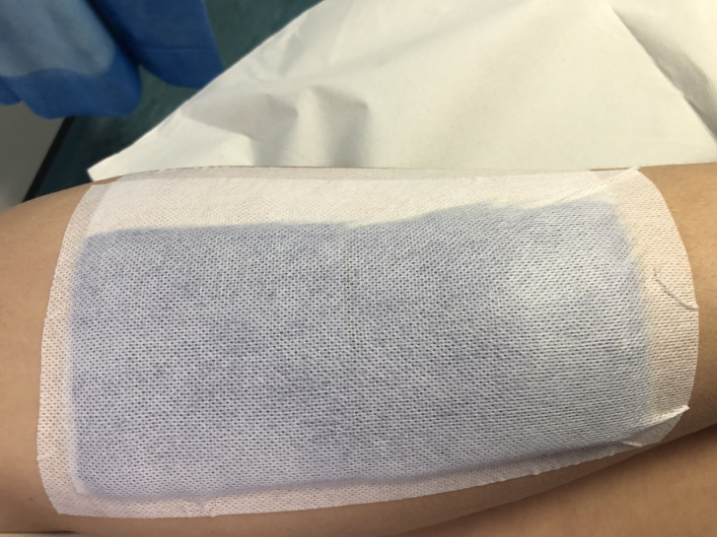
What will my skin graft donor sites look like when the top dressings have been taken off?
Once the oozing has stopped the top two dressings can be removed (top layer of the white dressing and the blue gauze underneath). This will leave you with one layer of the white Mefix dressing (see below). If the wound has not yet dried another absorbent dressing can be put on.
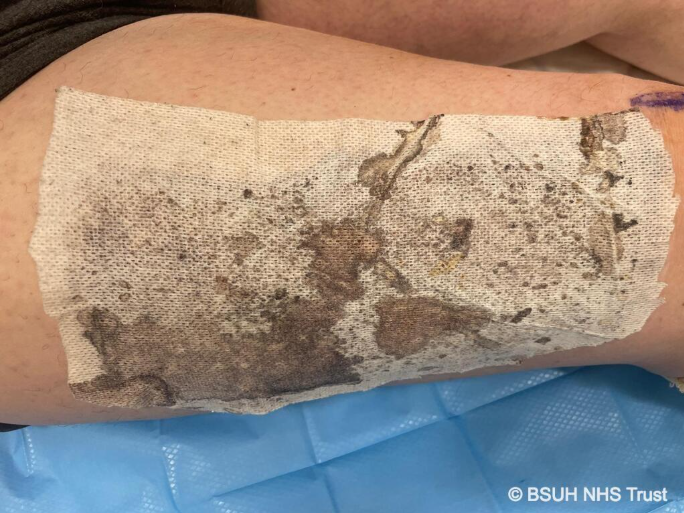
How do I look after my skin graft donor site?
Once the top two dressings have been removed by the nurse or doctor you can gently wash over the white dressing once a day using soap and water. Once finished, firmly pat away any excess moisture with clean gauze or an absorbent cloth and then leave it uncovered to air dry.
If the area is still oozing, increase washing to two or three times a day. This helps remove excess fluid and allows the white dressing to dry out naturally.
As the edges of the white dressing begin to lift, carefully trim them back to stop them catching on bedding or clothing.
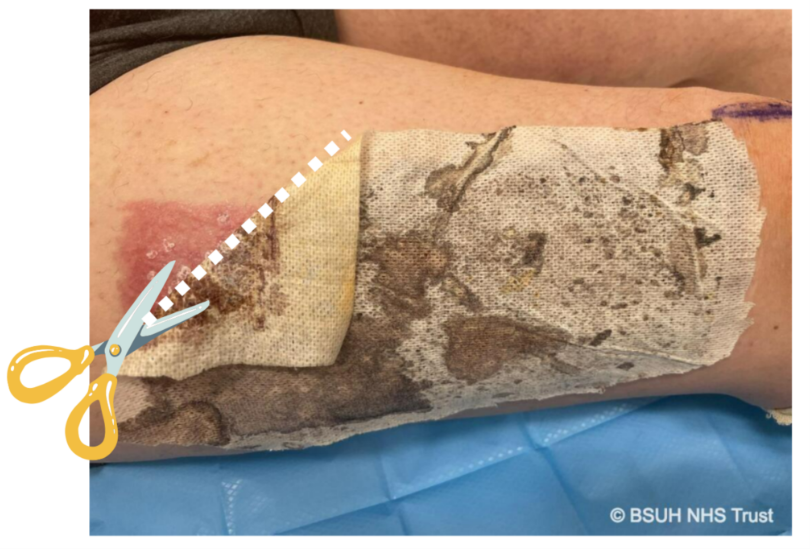
Please contact the Plastic Surgery team if you notice any changes or have concerns.
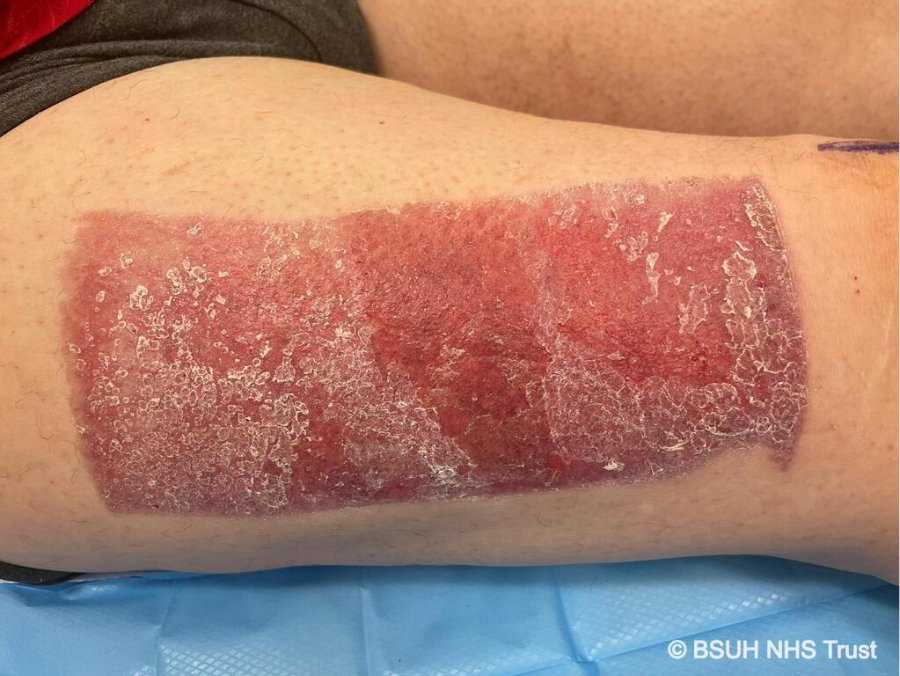
Once the area has healed fully the white dressing will fall off. This can take up to six weeks.
Once healed, the area may appear dry. You can use a non-perfumed moisturiser two to three times a day to help keep the area soft.
Who can I contact for further information and advice?
Plastic Surgery Team
Monday to Thursday 8.00am to 4.30pm, Friday 8.00am to 1.00pm.
In an emergency call 999.
If out of hours call 111 or contact your GP for advice.
 For clinical queries (for example, if you are worried about your wound)
[email protected]
For clinical queries (for example, if you are worried about your wound)
[email protected]
 For administrative concerns only (for example, if you are calling about a follow-up appointment)
01273 696955
Ext. 65956
For administrative concerns only (for example, if you are calling about a follow-up appointment)
01273 696955
Ext. 65956
This leaflet is intended for patients receiving care in Brighton and Hove or Hayward’s Heath.
The information in this leaflet is for guidance purposes only and is in no way intended to replace professional clinical advice by a qualified practitioner.
Today’s research is tomorrow’s treatments. That’s why UHSx is proud to be a research-active Trust. Find out how you can get involved.
Visit our website www.uhsussex.nhs.uk/research-and-innovation/information-for-patients-and-public or scan the QR code: 