
Download and print as a PDF (1MB pdf)
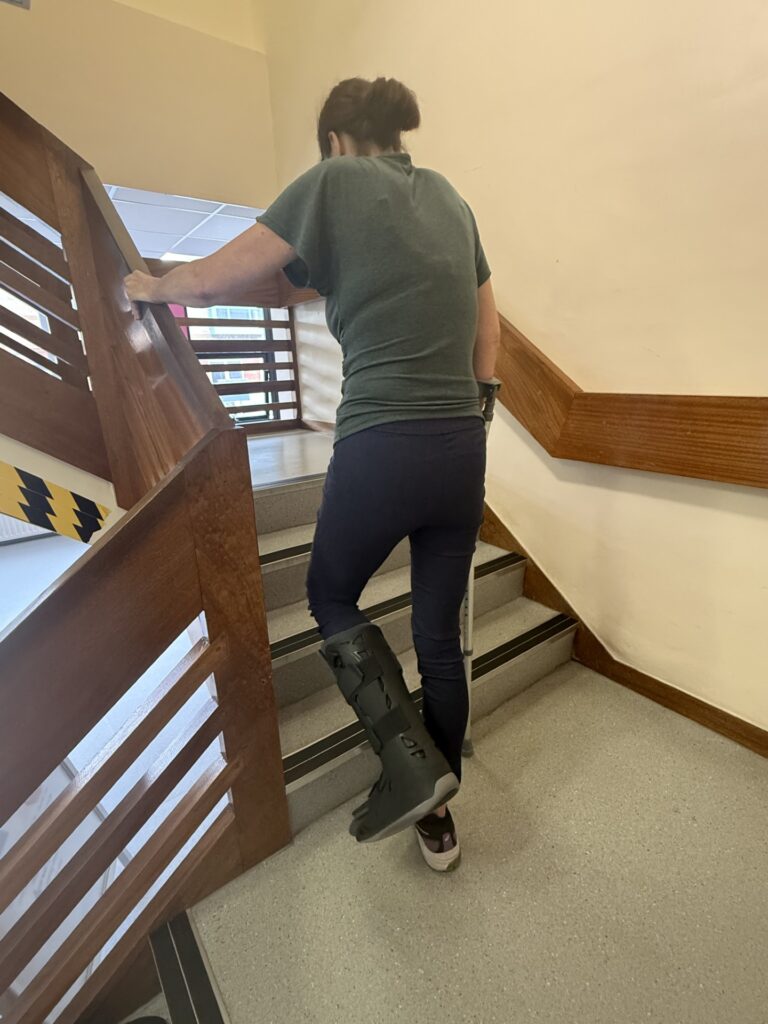
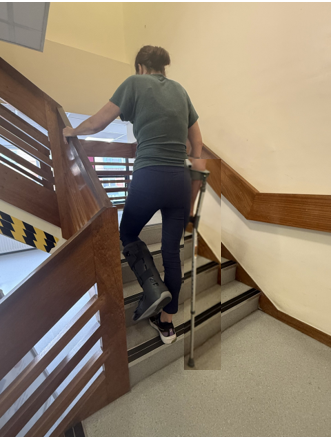
Going upstairs
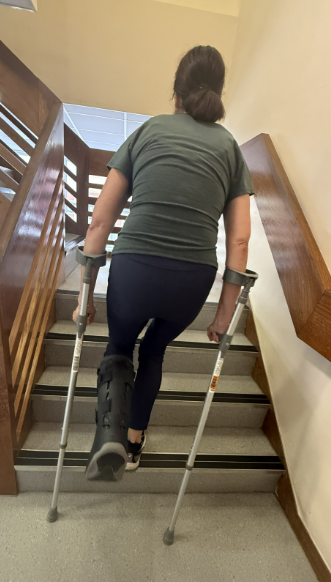
- hold your walking stick or elbow crutch in one hand, use the handrail with the other hand to stabilise yourself.
- lean on handrail and your stick or your crutch and bend your affected leg to reduce the risk of your foot hitting the step
- hop up on to the next step with your unaffected leg
- then bring your walking stick or your elbow crutch up to the step your foot is on
- repeat this exercise until you are at the top of the stairs.
Going downstairs
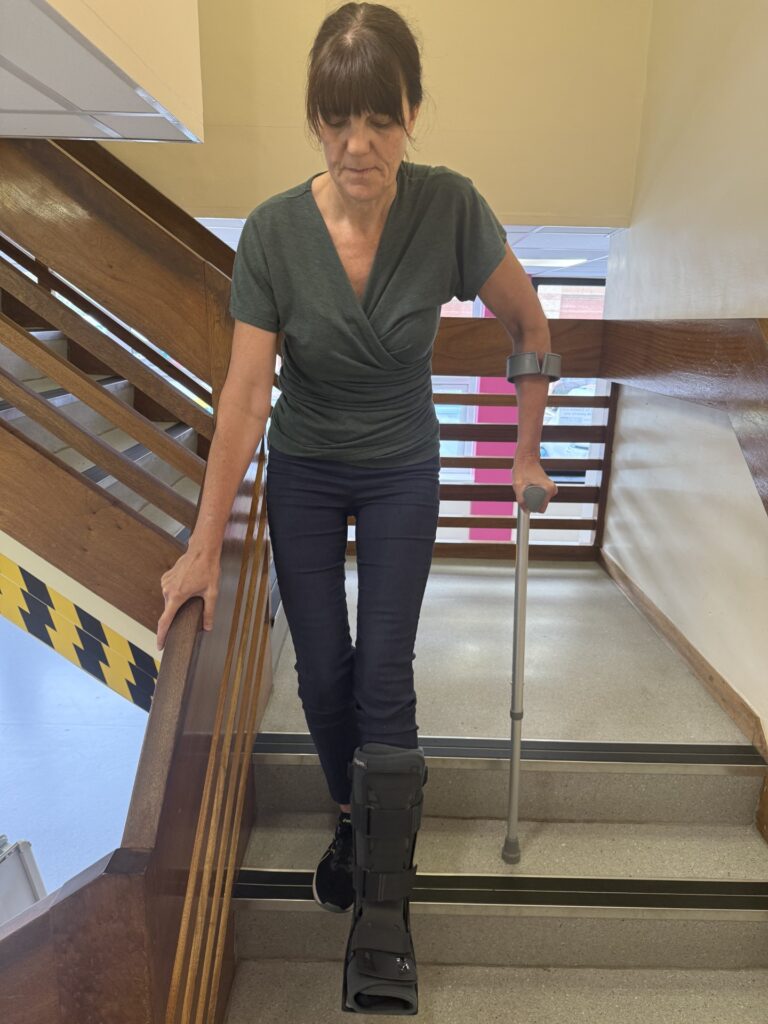
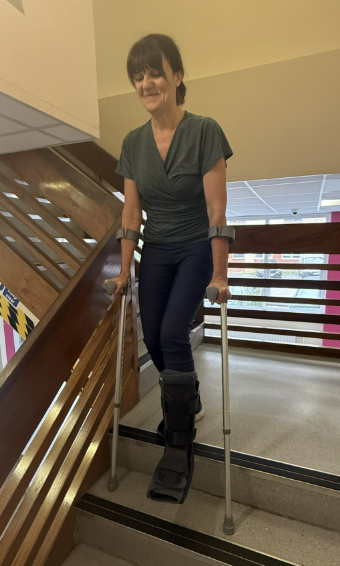
- hold the stick or the crutch in one hand, use the handrail with the other hand to stabilise yourself, close to the lip of the top step.
- with one hand on the handrail, place your stick or your crutch down onto the next step
- straighten your affected leg (keeping it off the floor) in front of you.
- hop or lower your unaffected or your non-operated leg down onto the same step as the stick/ crutch
- repeat this sequence until you finish the stairs

Going upstairs if you do not have a handrail or banister available
You will likely be offered the opportunity to practice this with the physiotherapy team before you leave the hospital.
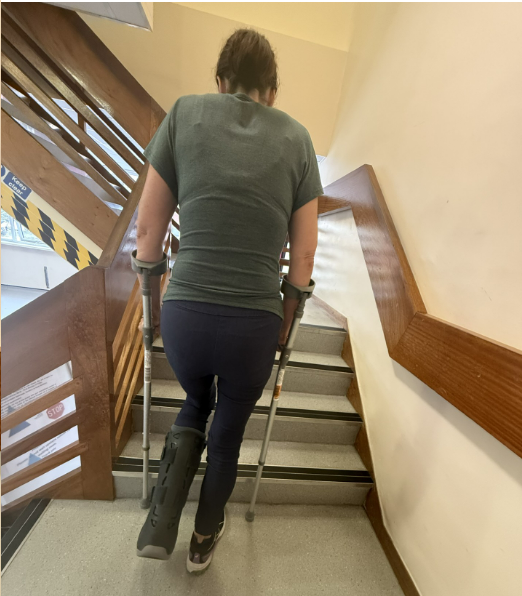
If you do not have a handrail or banister available, please follow the instructions below.
- keep both your walking sticks or your elbow crutches on the ground floor
- putting your weight through the walking sticks or crutches and bend your affected leg to reduce the risk of your foot hitting the step
- hop up on to the next step with your unaffected leg
- repeat this sequence until you are at the top of the stairs
- bring yourself close to the lip of the top step.
Going downstairs if you do not have a handrail or banister available
- bring your walking stick or your elbow crutch up to the step your foot is on
- place both your walking sticks or your elbow crutches on the step below
- straighten your affected leg (keeping it off the floor) in front of you.
- putting your weight through the walking sticks or crutches, hop or lower yourself to the step where your walking aids are
- repeat this sequence until you finish the stairs.

This leaflet is intended for patients receiving care in Worthing Hospital.
University Hospitals Sussex NHS Foundation Trust Disclaimer: The information in this leaflet is for guidance purposes only and is in no way intended to replace professional clinical advice by a qualified practitioner.
Today’s research is tomorrow’s treatments. That’s why UHSx is proud to be a research-active Trust. Find out how you can get involved.
Visit our website www.uhsussex.nhs.uk/research-and-innovation/information-for-patients-and-public or scan the QR code: 