
Download and print as a PDF (474kB pdf)
Information for patients
What is this information about?
This information is about soft tissue injuries to your hand.
It tells you:
- How to look after yourself when you go home.
- What exercises you can do to help heal and strengthen your thumb and hand.
- What follow-up treatment you might have.
- Who to contact if you need further help and support.
How long does this injury take to heal?
This normally takes approximately 2 to 4 weeks to heal. If you have been given a splint this is for comfort and does not affect the rate of healing.
How should I manage my pain and swelling?
Swelling is often worse at the end of the day and elevating (raising) it will help.
Taking pain medication and using ice or cold packs will help.
Use your normal painkillers or painkillers given to you in the emergency department. If these do not feel enough, contact your GP or pharmacist.
How should I use the splint?
Use the splint (if supplied) for comfort.
You can take the splint off for sleeping if you prefer.
At the beginning of week 2 try to stop using the splint. Begin using the hand for normal tasks but be guided by your pain levels.
How can I use my hand after this injury?
You may use the hand as pain allows.
You should gently start the exercises below to help get normal movement back in your hand. It is important to keep the fingers bending to stop then becoming stiff.
Do I need a follow up appointment for this injury?
This type of injury heals well and normally no follow up is needed. Contact us if you feel you need a follow up because you are not getting better.
How should I care for my injury during weeks 1 to 2?
Using a cold pack may help with your pain and swelling. You can use an ice pack or bag of frozen peas wrapped in a damp towel. Apply this to the sore area for up to 15 minutes, every few hours. Make sure the ice is not in direct contact with your skin.
What exercises should I complete during week 1 to 2 after my injury?
Follow the exercises below without causing too much pain. This will ensure your hand and wrist do not become too stiff. These exercises will help the healing process.
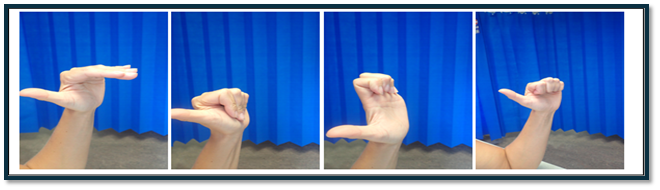
Bend and straighten all the joints in your fingers as shown.
Do not force the movement, work within your limits. Repeat 5 times.
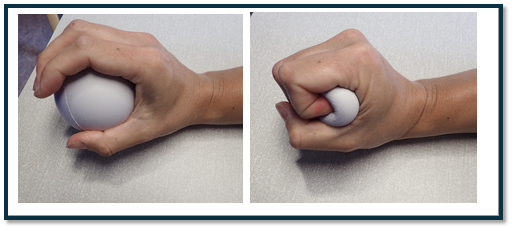
Practice squeezing a soft ball, playdough, a plastic bottle, or similar, periodically throughout the day. Hold for 30 to 60 seconds as able.
Grip exercises:
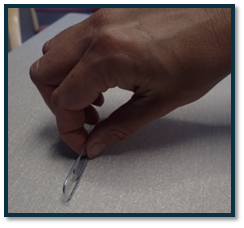
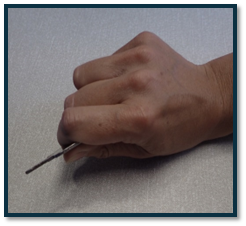
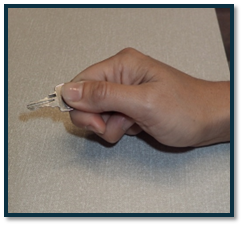
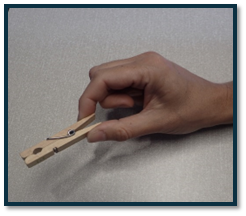
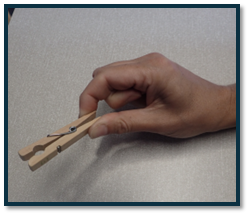
Practice hand movements. Some simple things to start with might be:
- Turning keys.
- Picking up small objects.
- Doing simple crafts.
- Pinching objects such as clothes pegs.
- See the examples images below.
How should I care for my injury from 2 to 4 weeks after my injury?
The injury has healed.
You can return to normal activity but be guided by any pain you are experiencing. Carry out day to day activities. Heavy tasks or lifting may still cause some discomfort and swelling.
What should I do If I am concerned about my symptoms or struggling to return to exercise?
Contact the Virtual Fracture Clinic.
I am struggling with my sling or strapping. What should I do?
Contact the Virtual Fracture Clinic. We can change your splint or give advice if needed.
When can I start driving?
You can return to driving when:
- You are no longer using a splint.
- You can move comfortably.
- You can control the vehicle safely.
How can I get a note for work?
Please contact the Virtual Fracture Clinic.
How do I contact the Virtual Fracture Clinic?


This leaflet is intended for patients receiving care in Worthing and St Richard’s Hospital.
The information in this leaflet is for guidance purposes only and is in no way intended to replace professional clinical advice by a qualified practitioner.
Today’s research is tomorrow’s treatments. That’s why UHSx is proud to be a research-active Trust. Find out how you can get involved.
Visit our website www.uhsussex.nhs.uk/research-and-innovation/information-for-patients-and-public or scan the QR code: 