
Patients in Sussex with a serious heart condition called ‘tricuspid valve disease’ have become the first in the UK to successfully receive an innovative heart valve implant through an international research trial.
Now taking place at Royal Sussex County Hospital in Brighton as part of the VDyne VISTA Trial, these procedures offer a new treatment option for patients with limited or no alternatives. This new trial reflects the Trust’s vision to achieve excellent care everywhere, giving patients access to cutting-edge research and treatment options.
For patients with this disease, the minimally invasive heart valve procedure on this trial is being offered only when all other suitable treatments have been exhausted. This makes it a carefully considered option for those facing severe disease and limited alternatives. Patients with severe disease (especially older or frailer individuals) are often unsuitable for open-heart surgery or face significant risks from it.
The trial aims to evaluate the safety and clinical effectiveness of the heart valve procedure. Royal Sussex County Hospital, operated by University Hospitals Sussex, is currently the only centre in the UK to have successfully implanted the innovative VDyne tricuspid heart valve as part of the trial.
Tricuspid valve regurgitation occurs when a valve on the right side of the heart does not close properly, causing blood to leak backwards and forcing the heart to work harder. Over time this can lead to symptoms such as breathlessness, fatigue and swelling. In severe cases it can progress to heart failure.
Without treatment to fix the valve, the condition often gets worse over time and can eventually limit how long someone lives. Tricuspid regurgitation affects millions of people across Europe, with studies suggesting that up to 1% of older adults may have severe disease.
Hove chef back in the kitchen weeks after innovative heart valve procedure
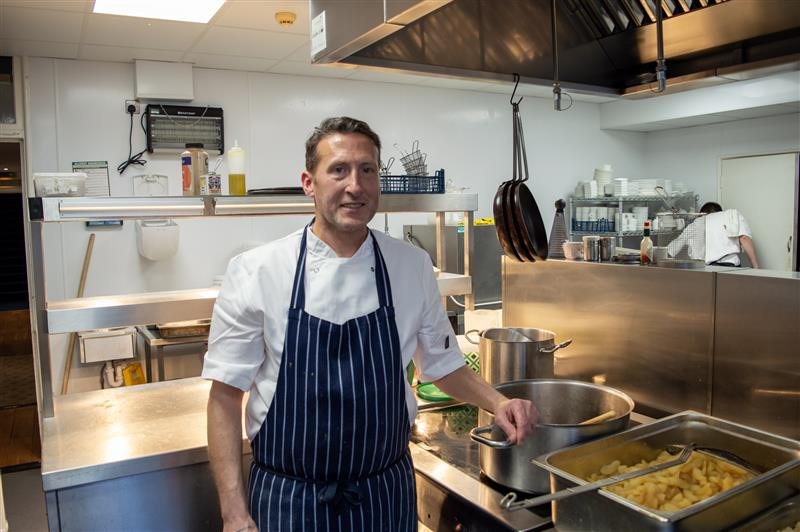
Stephen Beadle, 51, from Hove, is only the second patient in the international trial to receive the VDyne valve, after undergoing the procedure at Royal Sussex County Hospital in November last year.
Stephen, who works as a chef, has lived with heart disease for around 13 years and has had a pacemaker since the age of 40. When his condition worsened due to severe tricuspid valve disease, doctors recommended the procedure through the clinical trial because other treatment options were not suitable.

He said the minimally invasive surgery made a significant difference to his recovery.
Stephen said: “The recovery was really quick. I was back at work about a week later, which I honestly didn’t expect.
“I’ve definitely noticed I have more energy now and feel much better than I did before the procedure.”
Stephen continues to attend follow-up appointments at Royal Sussex County Hospital as part of the trial and described the care he received from the clinical team as “second to none”.
“The clinicians were excellent throughout,” he added. “I felt completely looked after from start to finish.”
How the heart valve trial works at Royal Sussex County Hospital
The procedure, known as transcatheter tricuspid valve replacement (TTVR), uses advanced catheter technology (a very thin, flexible tube) to deliver a replacement valve to the heart through a vein in the leg. This approach avoids the need for open-heart surgery and significantly reduces recovery time.
The procedure is carried out using advanced cardiac imaging and specialist equipment to ensure the new valve is accurately placed inside the heart. Patients are monitored over years to assess the safety and effectiveness of the new technology and to help determine whether it could one day become a standard treatment option.
The procedure is being delivered at Royal Sussex County Hospital by a specialist multidisciplinary cardiac team, including cardiologists, imaging specialists, anaesthetists, nurses and radiologists, led by Professor David Hildick-Smith, Consultant Cardiologist.
The trial aims to assess whether the implant is safe and effective at treating severe disease and improving patients’ symptoms and quality of life. The development of catheter-based tricuspid valve implants is still at an early stage globally, with only a small number of centres globally currently able to perform the procedure.
Professor David Hildick-Smith, Consultant Cardiologist at University Hospitals Sussex, said: “We’re delighted to be delivering this innovative heart valve procedure as part of our ambition to deliver excellent care everywhere and offer Sussex patients access to cutting-edge research. This trial is particularly important, as treatment options for severe tricuspid valve disease have traditionally been limited. While tablets can help manage symptoms, they don’t cure the condition, and open-heart surgery can carry significant risks – especially for older or frailer patients. For a small number of patients, where medication provides only temporary relief and surgery is too risky, this procedure may be the only remaining option.
“This trial is testing the safety and effectiveness of implanting a new valve through a vein in the leg, offering a potential new treatment option. I’m proud that Royal Sussex County Hospital is the first UK centre to carry out these procedures as part of the trial. If results remain positive, it could open the door for many more patients to benefit in the future.”